
No products in the basket.

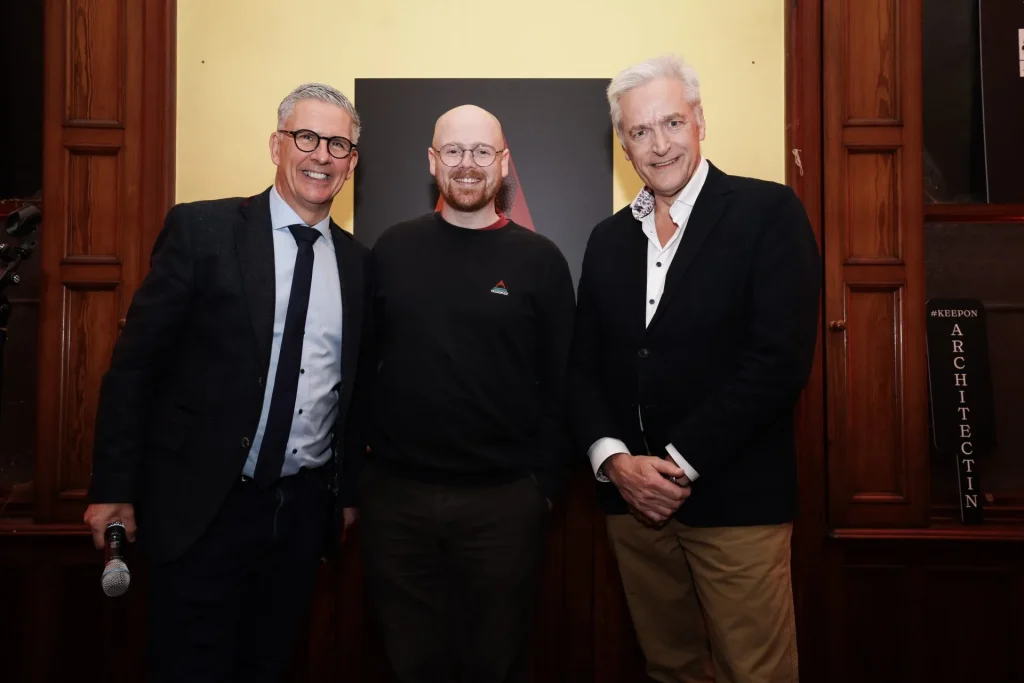
Architecture Night celebrated all 12 entrants to this year’s Design Competition for Early Career Architects, in partnership with JP Corry.
‘The Water Canon’ challenged Early Career Architects to propose creative ideas for a public outdoor installation to make people think about our relationship with water. It presented an opportunity to engage the public in a celebration of rainfall and water, to increase public awareness of the unique importance of water, to highlight the challenges faced by our water system and to potentially showcase ideas for how water can be better integrated into our built environment.
For more details of the competition including the full brief click here.
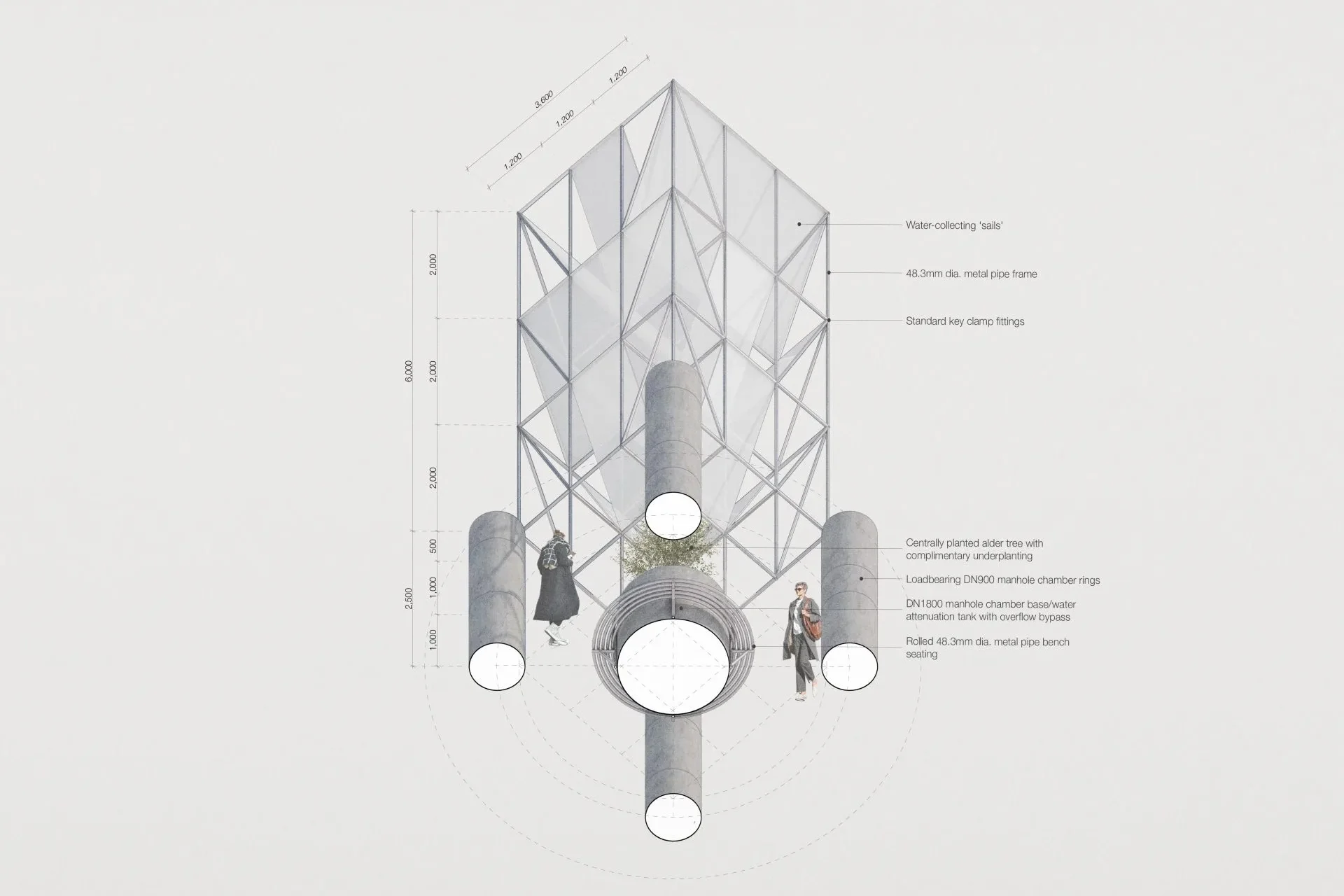
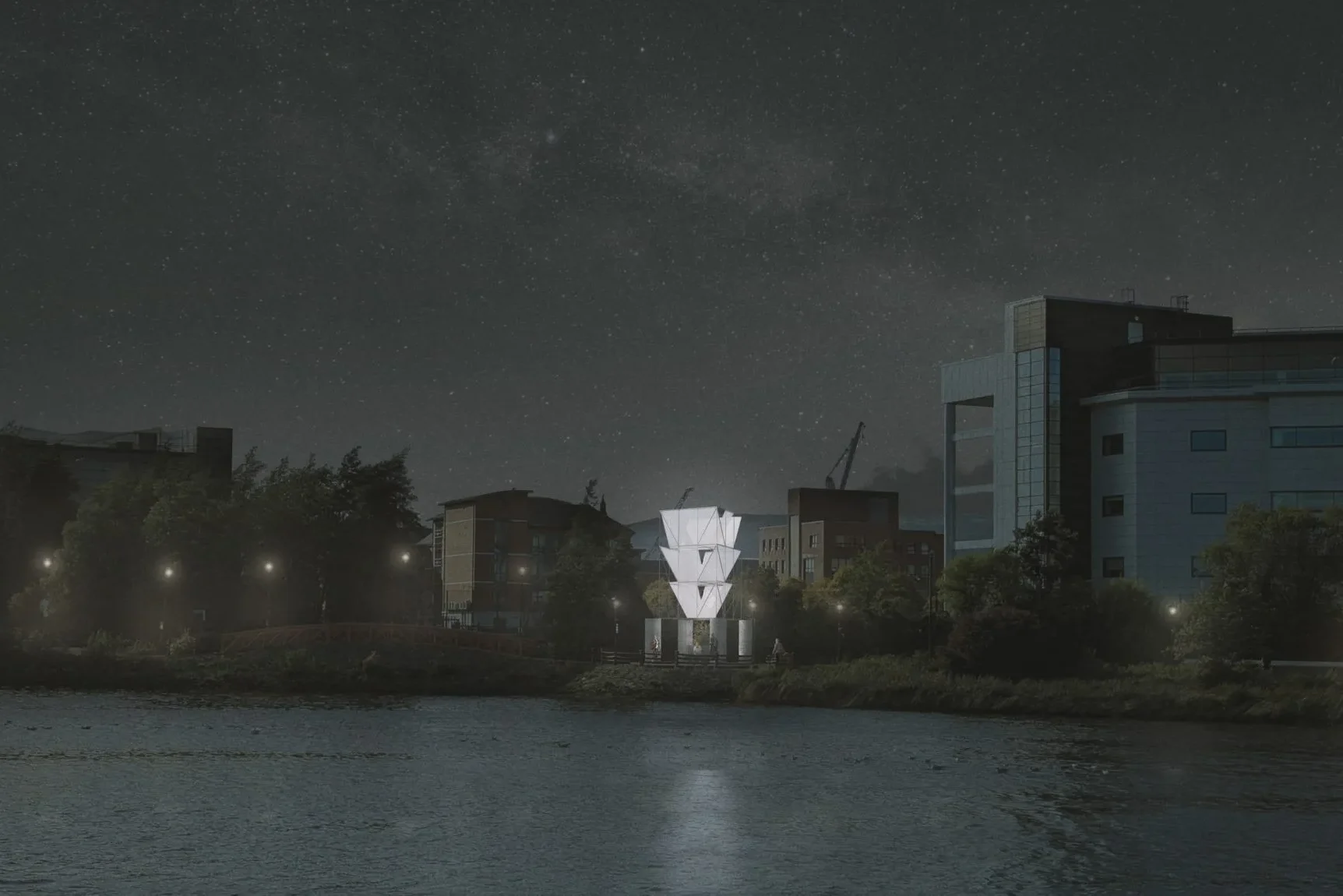
We were pleased to announce To Flow Together by Ciaran Magee as the winner of this year’s competition.
The winning entry proposed a concrete and lightweight metal structure, situated by the Lagan towpath which would collect falling rainwater in a central planter encircled by bench seating to create a place to take shelter, commune, and experience the collection of rainwater.
The concept was based on the ‘compluvium’, an ancient Roman structure through which rainwater was directed internally via roof opening and stored for domestic use. This proposal takes the inward sloping form of the compluvium roof and explodes it into a series of cascading fabric planes suspended within a lightweight metal structure. This frame is elevated by four columns constructed from precast concrete manhole chamber rings. As rain falls, the ‘sails’ gather rainwater from above and all four sides, directing
it down the planes, pitter-pattering to a central planter formed from a larger manhole chamber base.
Click here for all the supporting text for To Flow Together.
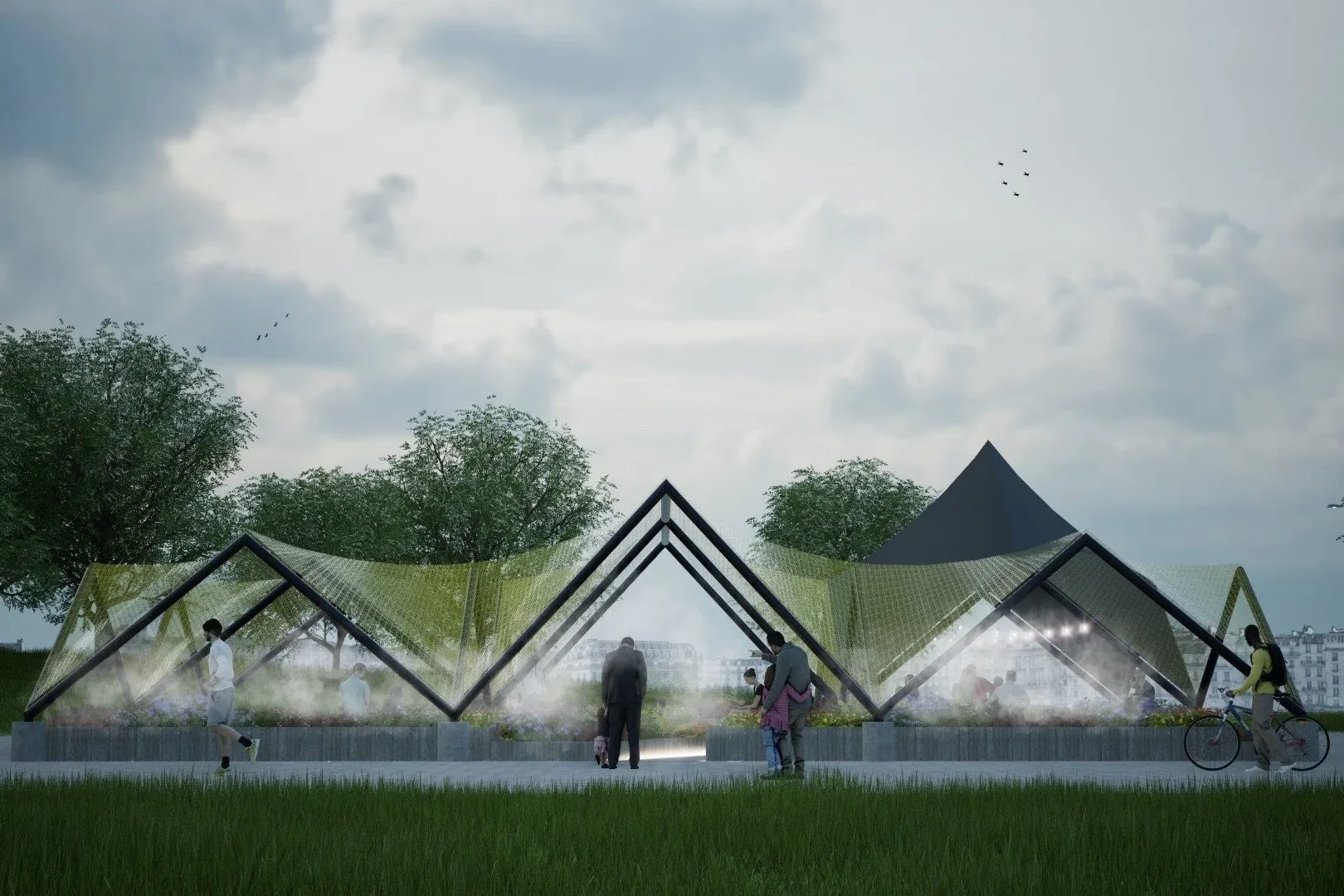
W.E.A.V.E. by Joel Jamieson and Scott Kennedy
This entry proposed a biomimetic, fog harvesting pavilion that celebrates the natural water cycle. It takes the form of a light, woven canopy that celebrates the full “canon” of water. From sky to soil and back again, celebrating the intermittent state of water as an active vapor.
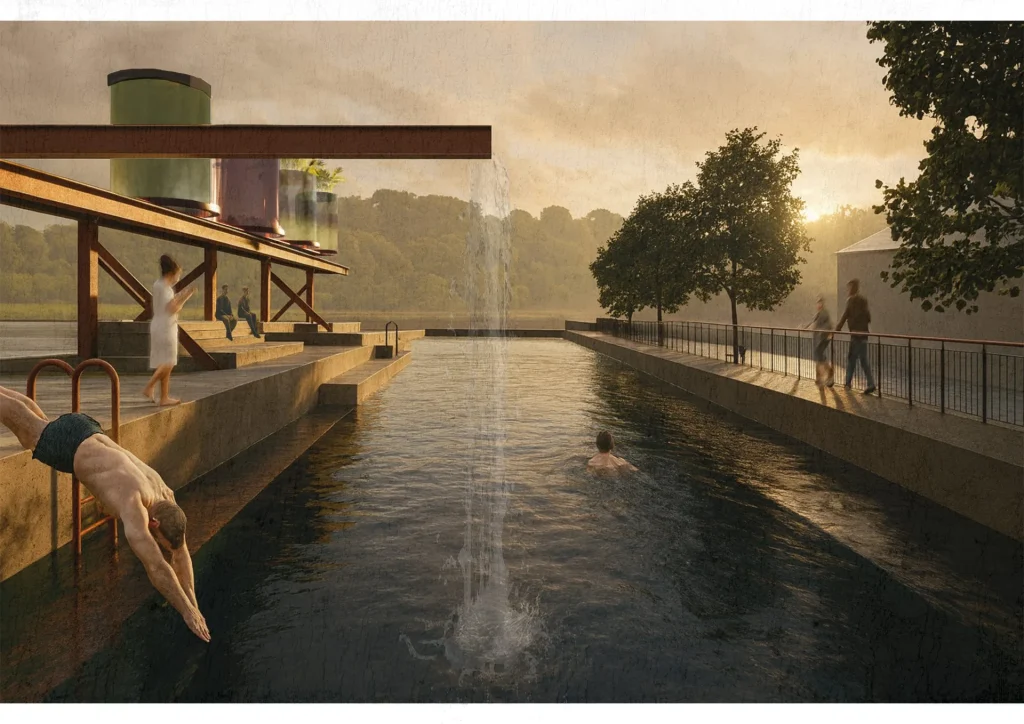
Uisce Beo – Living Water by Laura Green
This project proposed an interactive water-filtering sculpture, combining art, ecology, and engineering. It is designed as a portable prototype, capable of being installed anywhere. Its purpose is twofold: to clean small quantities of river water naturally, and to invite the public to learn from, interact with, and take part in that process.
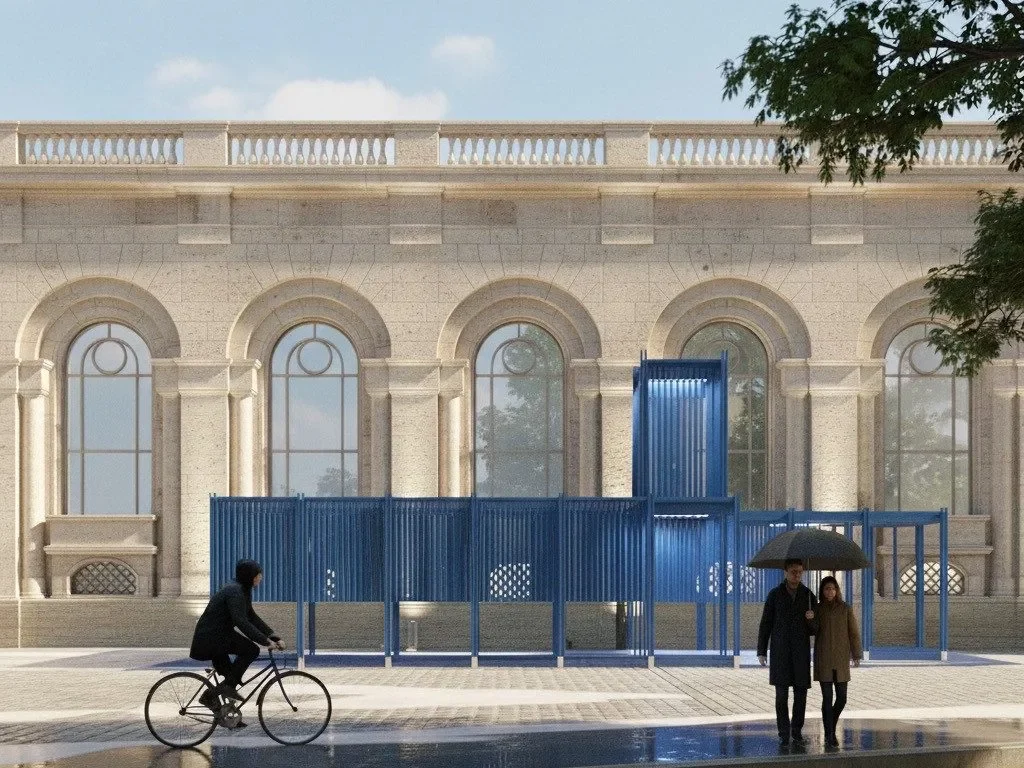
Fractured Water by Alex Knowles and Mark McMullan
Fractured Water re-imagines Belfast’s lost River Farset. The pavilion’s architecture is composed of shifting, fractured planes that open, split, and fold inward like tectonic plates, echoing the way the river has been forced underground in pieces. The visitor’s journey through the pavilion becomes a walk along the river’s disrupted path: from open, connected waters to a darkened, fragmented channel.
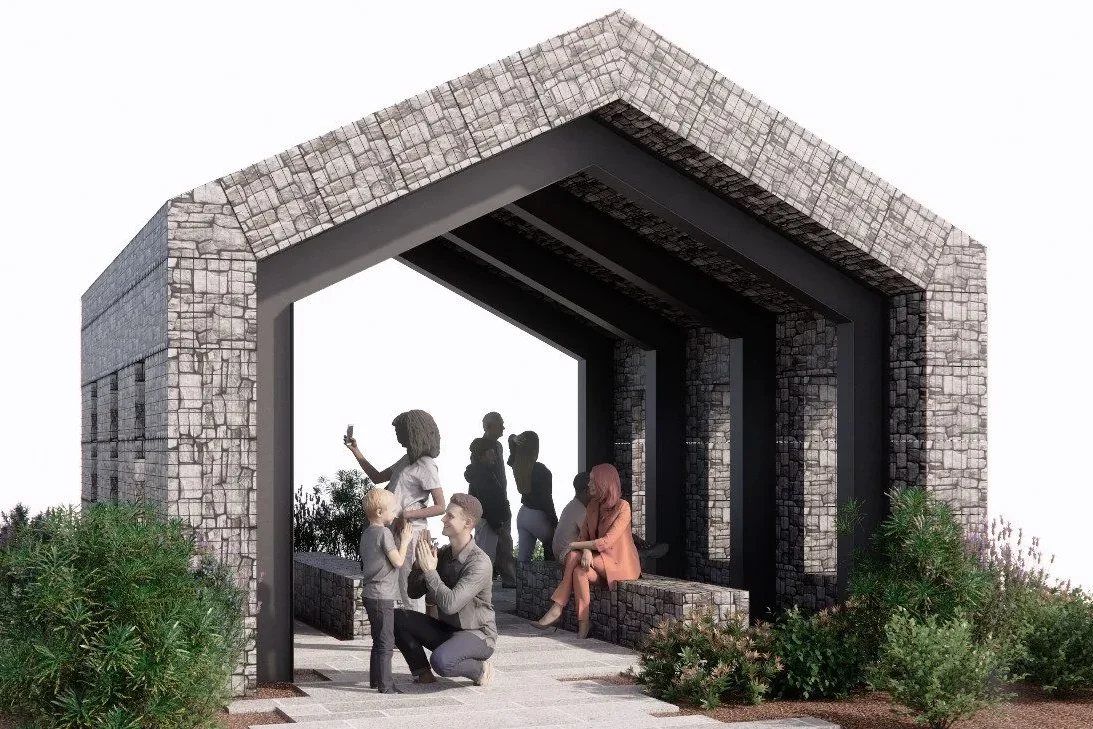
Travelling Water Pavillion by Rory Haughian
The purpose of the Travelling Water Pavilion is to re-embrace the traditional characteristics of the movement of water before the influence of the concrete jungles of today’s cities and towns through the use of passive water attenuation. The concept takes the section of the simple house and develops it into a structure encouraging water flow.
Are WE Suppressants by Lara Magee
As a public outdoor installation, this proposal serves to benefit the community and show how water can be better integrated into our urban environment as a space for play, for rest, for meeting and for thinking. The design allows for it to be scalable from location to location, with the potential for multiple iterations throughout the city.
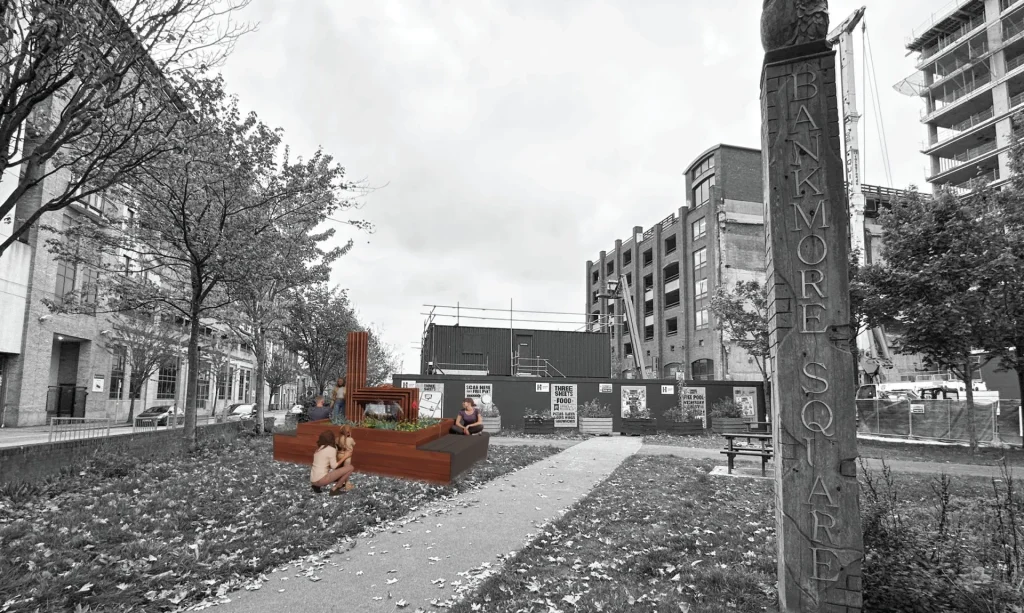
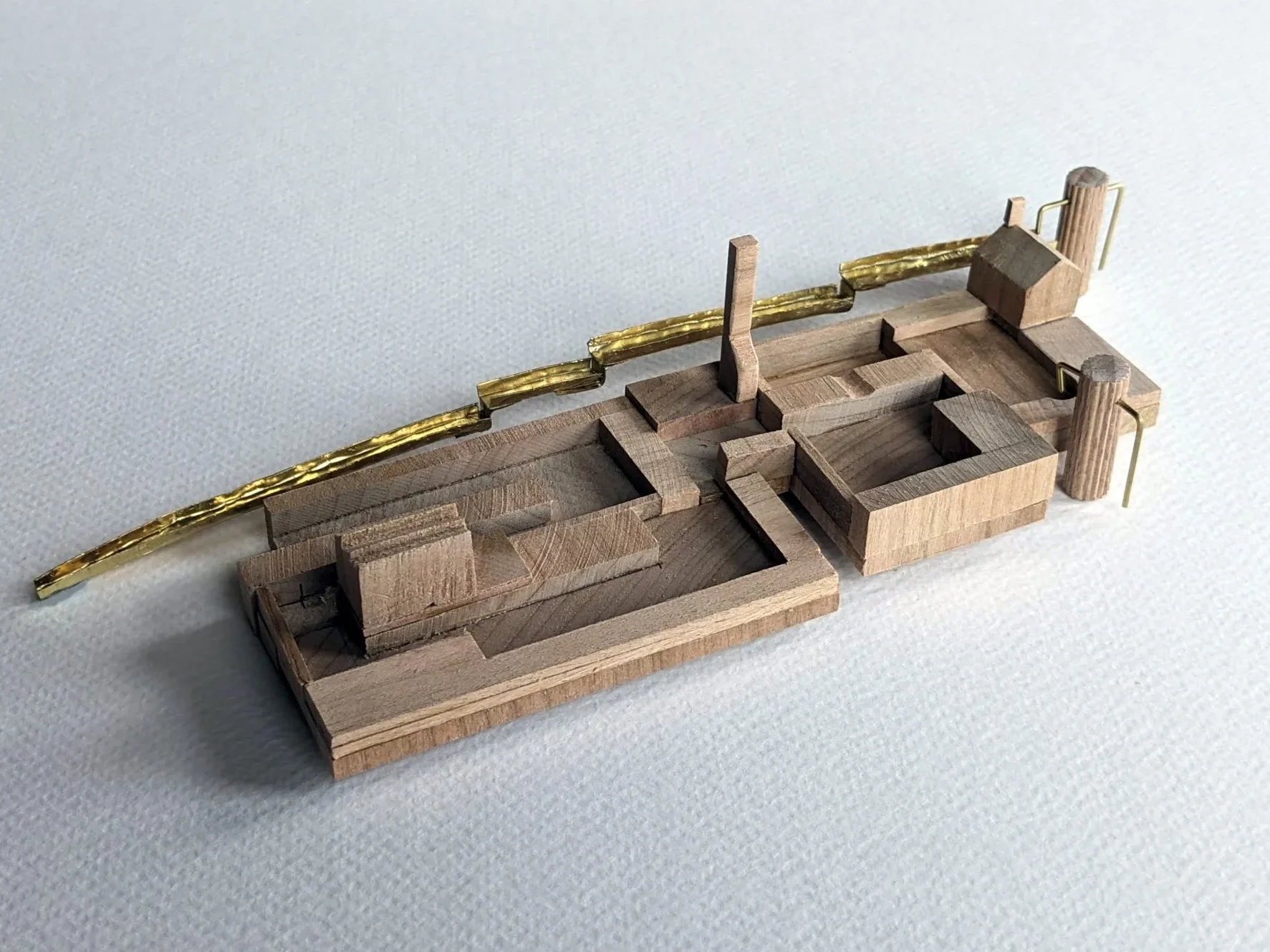
The Water Table by Nadine Graham and Alice Nickell
This submission proposes the installation of a public table, with an associated bench and planting. The table is envisaged as a civic space, a venue which can be used by individuals or groups, to educate and promote public discourse about water in our
society. The table literally brings the concept of water and drainage to the surface, making tangible infrastructure where it is usually out of sight and out of mind.
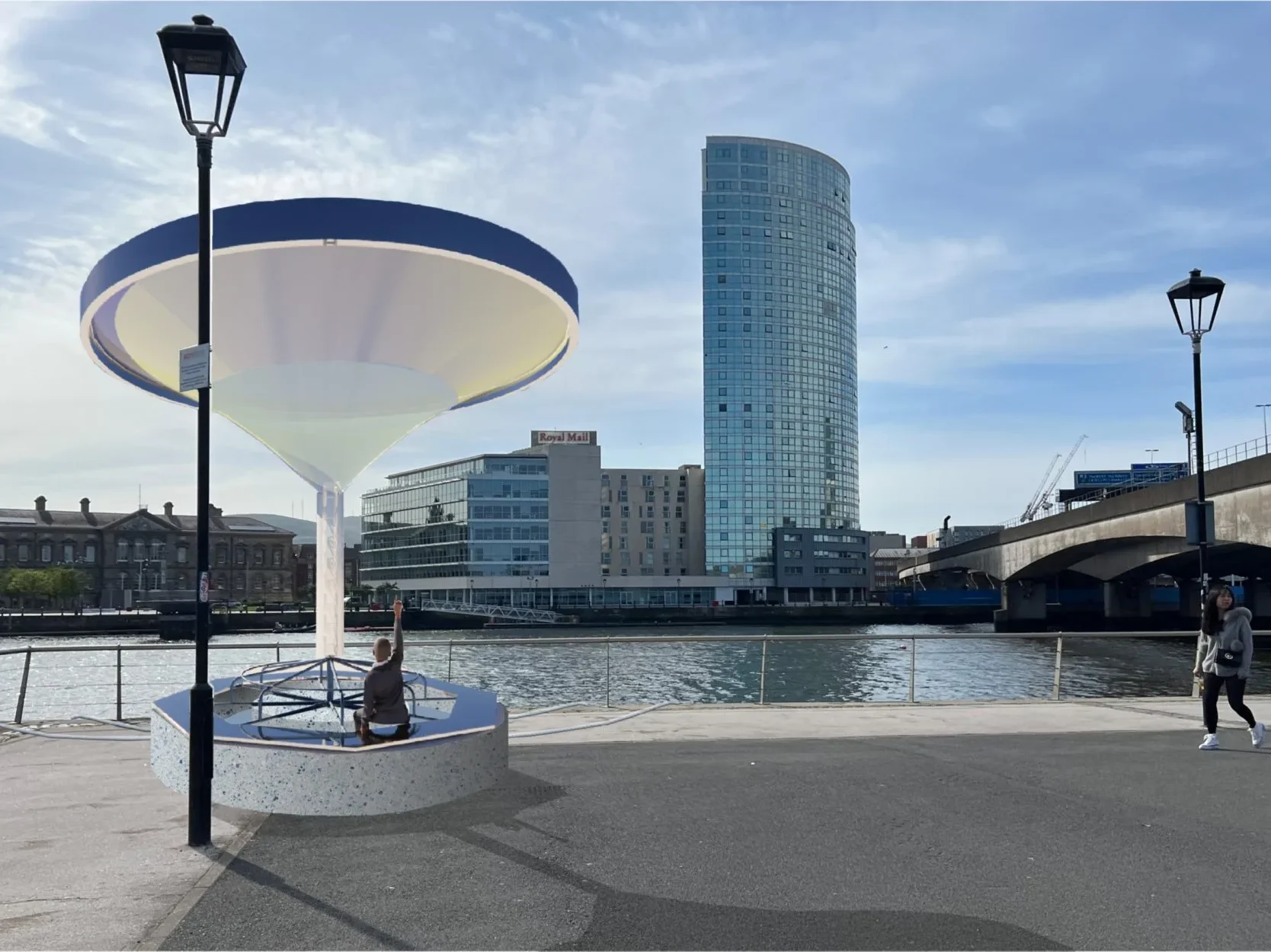
The Living Wheel by Caitlin Paxton
The Living Wheel reimagines Belfast’s hydrological heritage as a living, kinetic sculpture — transforming rainfall into energy, light, and awareness. Inspired by waterwheels and the city’s buried rivers like the Farset, it honours the waterways that once powered Belfast’s industry and shaped its name. As water flows through the sculpture, it becomes a medium of motion and memory.
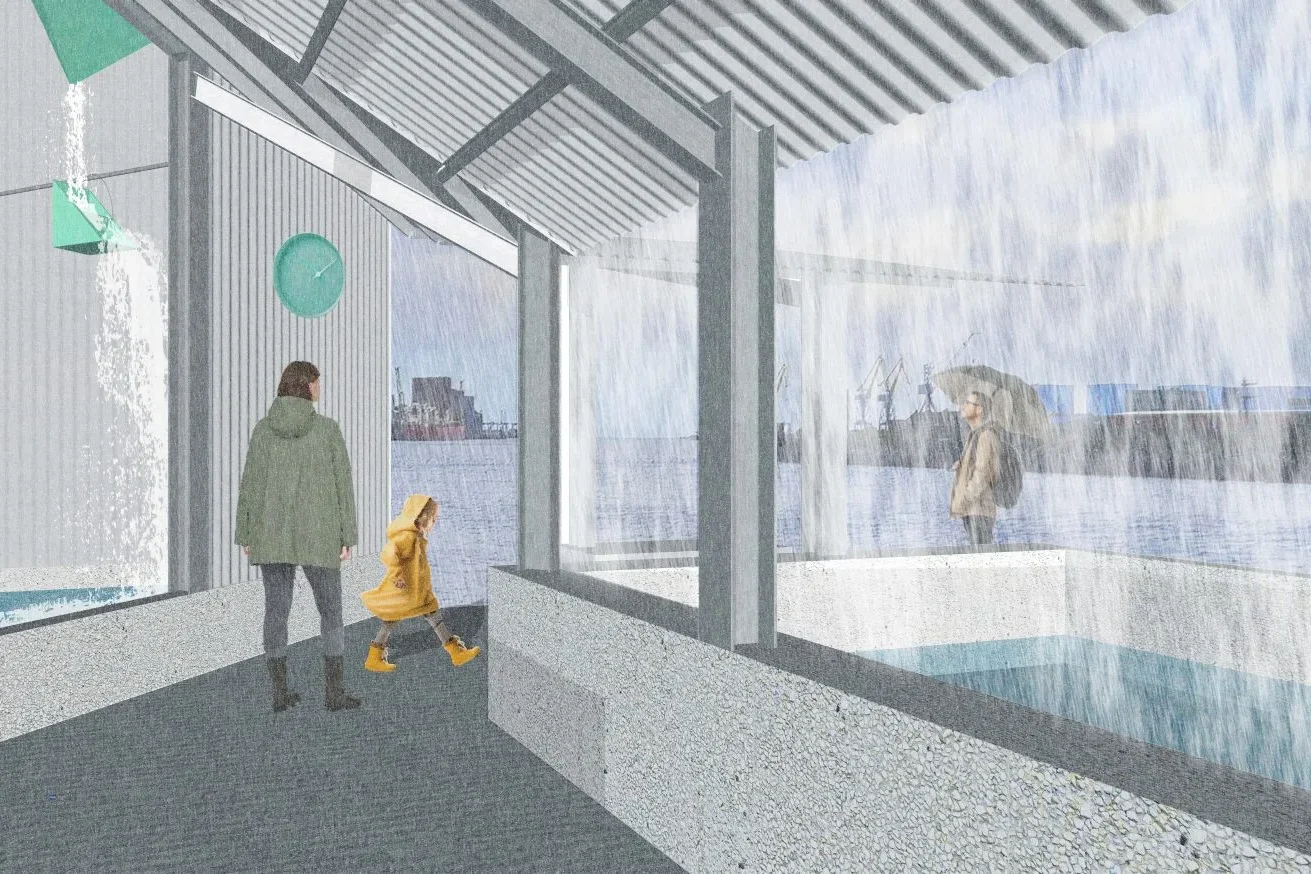
The Weather Room by Eryn McQuillan
The waterfront pavilion uses water as a design element to create a sensory experience and deepen conversations about the weather in Northern Ireland’s urban spaces. By integrating weather phenomena into the built environment, the pavilion becomes a destination for reflection and interaction, encouraging awareness of environmental change and the role of design.
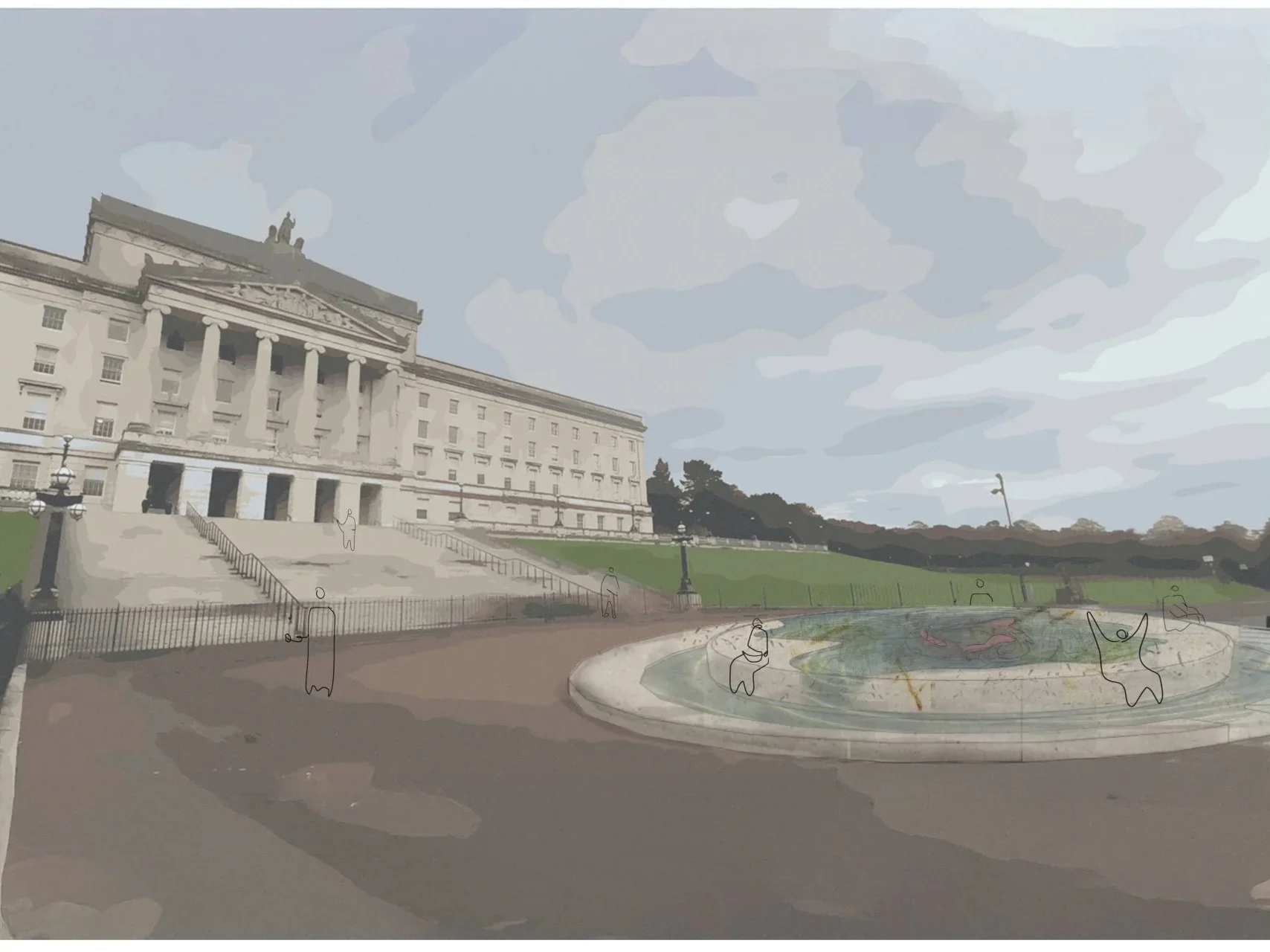
Water from the Well by Peter Lawson, Nicole Thompson, Owen West and Tanishka More
This proposal places a circular, above ground water pavilion at the top of Stormont Hill, adding a quiet reminder that insists on water’s civic importance. The site is a broad drop-off point of tarmac known as ‘the bull ring’, where people linger, with nowhere meaningful to gather after the security gates close at 4 pm. The installation turns that moment of neglect into a moment of reflection: a circular water pavilion that reads as both ancient and provisional.
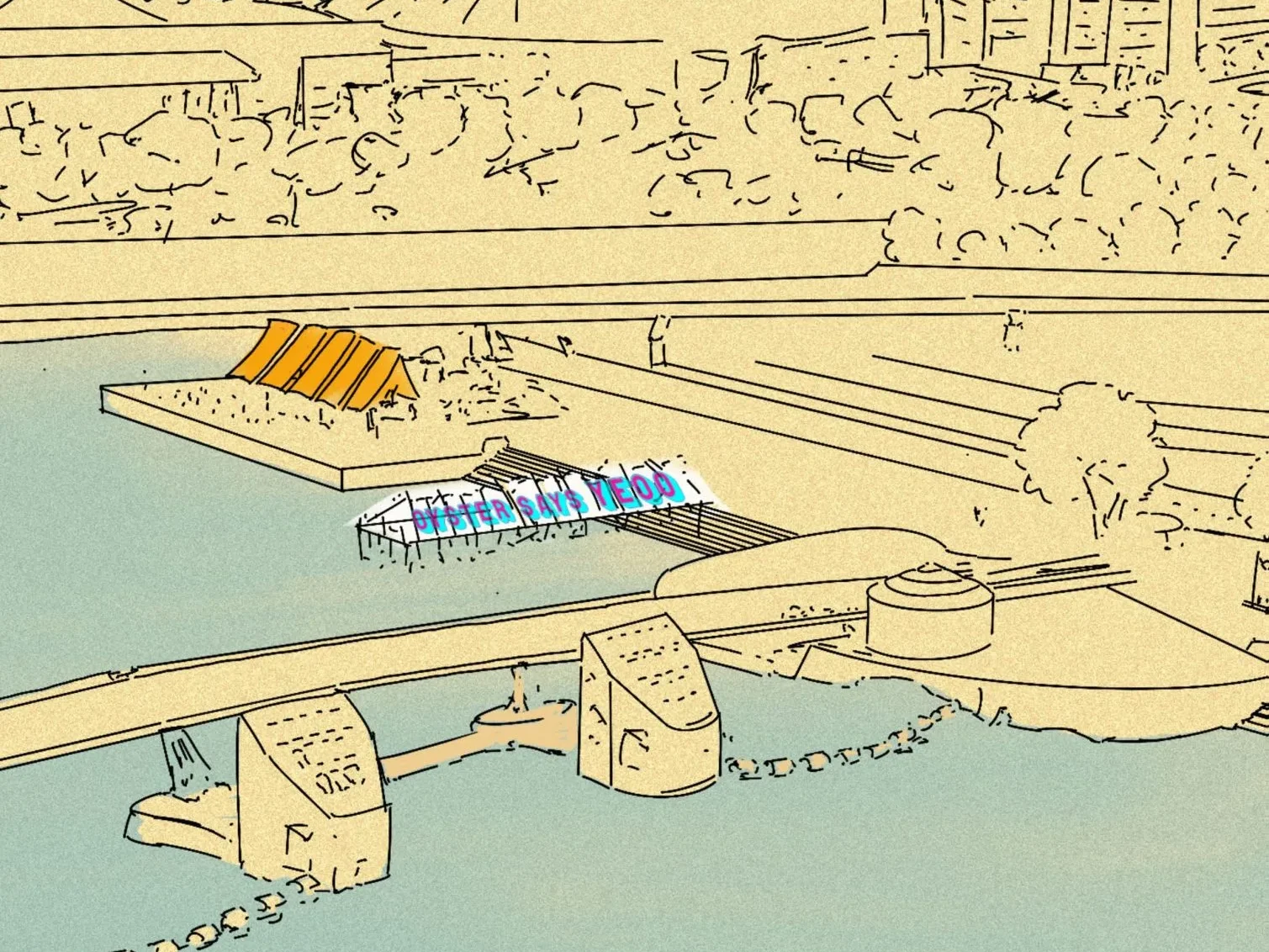
Oyster says Yeoo by Rebecca Jane McConnell and Cathal Crumley
This is a pilot proposal for a bioreceptive concrete
column seeded with native oysters in Belfast.
Part public installation, part ecological
infrastructure designed to make water visible,
alive, and valued again. This project invites people to think differently about how we live with water… as something to be cared for, not fought against.
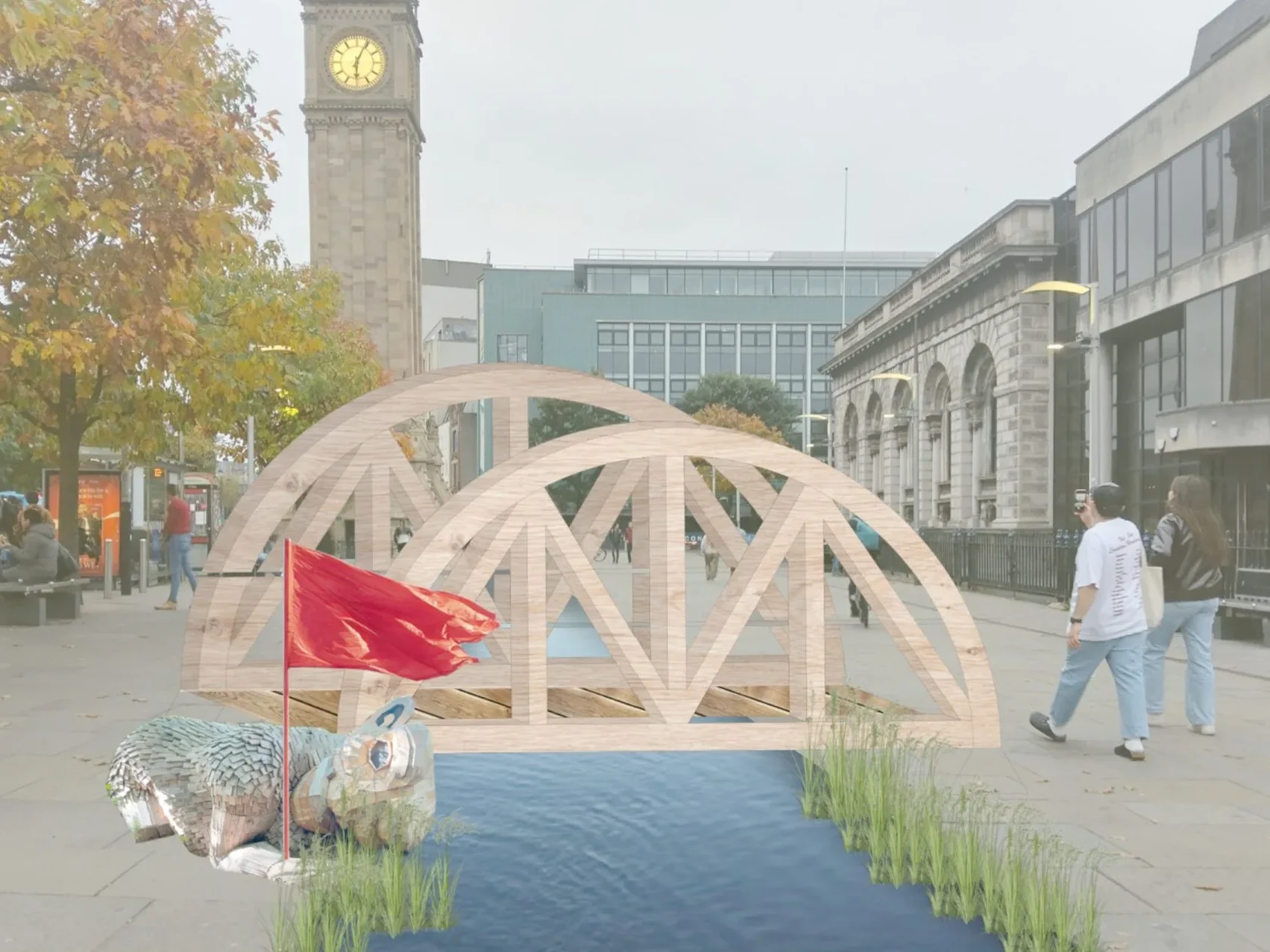
Toe in the Water by Catherine Mallon
This proposal comes about from our love of water and want to embrace it, however that is not a reflection of our true relationship with water in Northern Ireland. The submission proposes a timber bridge over the River Farset, a river that is already built over and forgotten about, as a wider thought on how we build over and forget about water.
The judging panel for the competition consisted of:
