
No products in the basket.
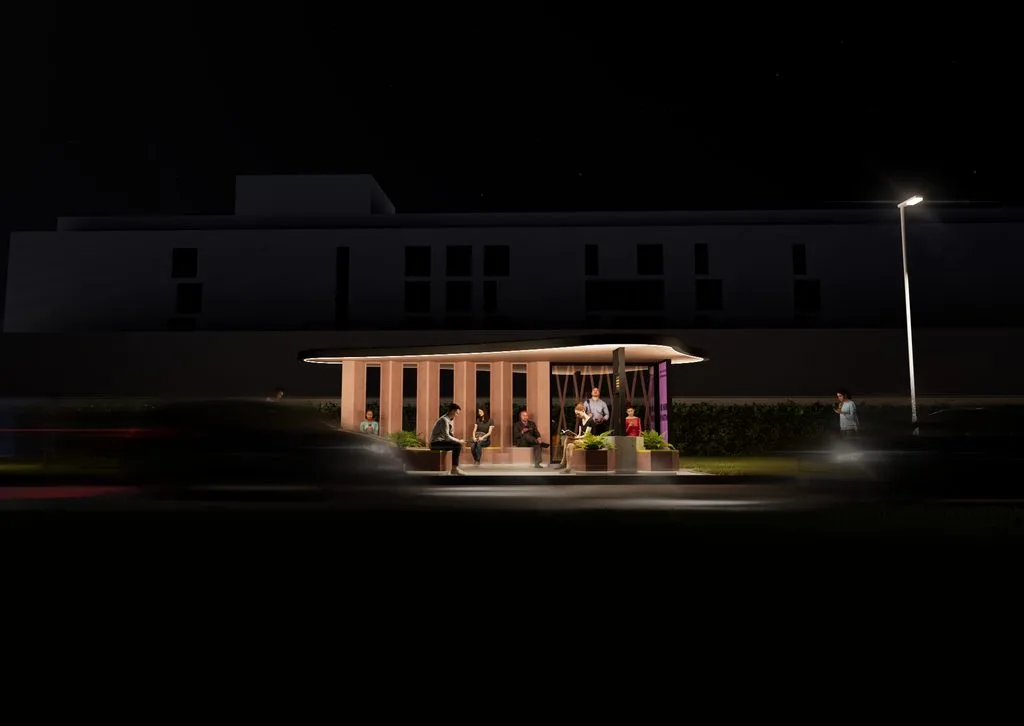
Architecture Night 2026 celebrated the 11 entrants to this year’s Design Competition for Early Career Architects, in partnership with JP Corry.
The competition challenged Early Career Architects to propose creative ideas for a specific bus shelter that explores the potential of gender equity and inclusivity within public realm design.
This year’s design challenge has been developed in conjunction with RSUA Women in Architecture and supports The Executive Office’s Strategic Framework to End Violence Against Women and Girls (EVAWG). This framework seeks to address the whole range of gender-based violence, abuse and harm which is disproportionately experienced by women and girls, and which is rooted in gender inequality.
The framework calls for a ‘whole of society’ approach and stresses that there is something everyone can do to help. This competition formed part of RSUA’s response to that call to action.
For more details of the competition, including full brief, click here.
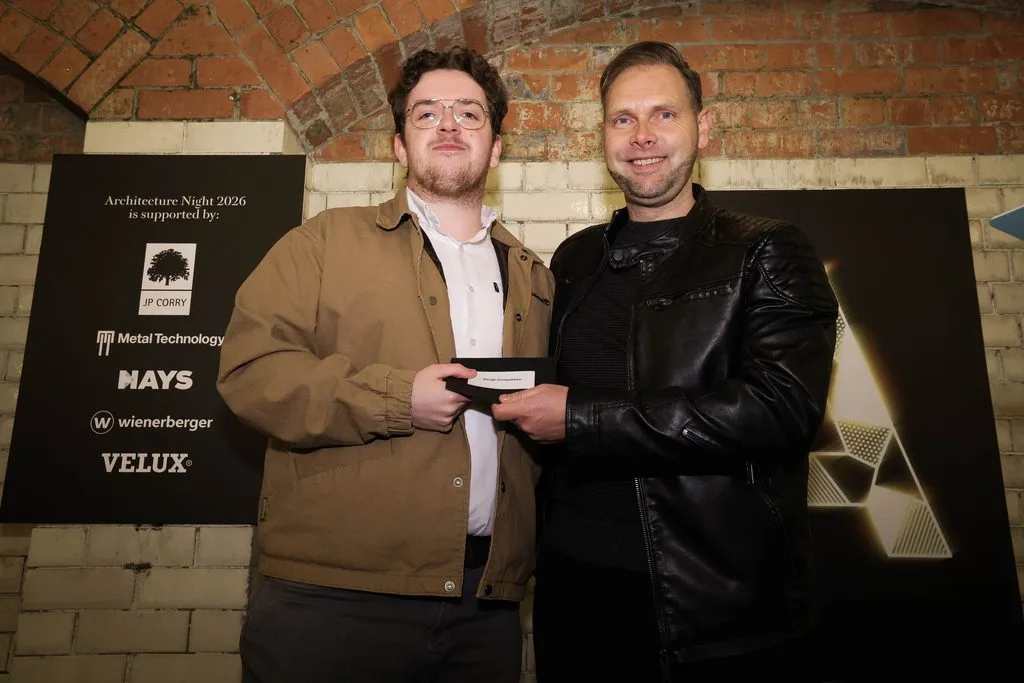
Joel Jamieson, winner of the ‘No Harm in Waiting’ design competition with competition judge Connor Couston of JP Corry
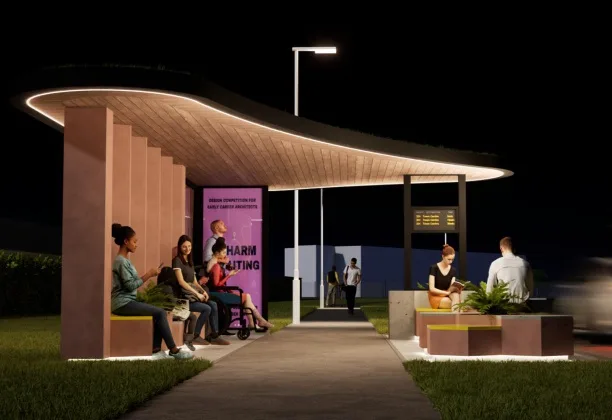
We were pleased to announce Common Ground by Joel Jamieson as the winner of this year’s competition.
The winning entry identified the need for essential bus infrastructure along the St. Patrick’s Link Road in Ballymena. Positioned outside the new Northern Regional College campus and spanning a busy existing footpath, Common Ground promotes choice and personal comfort by enabling people to occupy the same space in different ways.
Inspired by the basalt columns of the Giant’s Causeway, the design respects personal space boundaries through varied seating arrangements and subtle separation. The judges praised the thoughtful, human-centred concept, which allows all users to wait with confidence.
Click here for all supporting text for Common Ground.
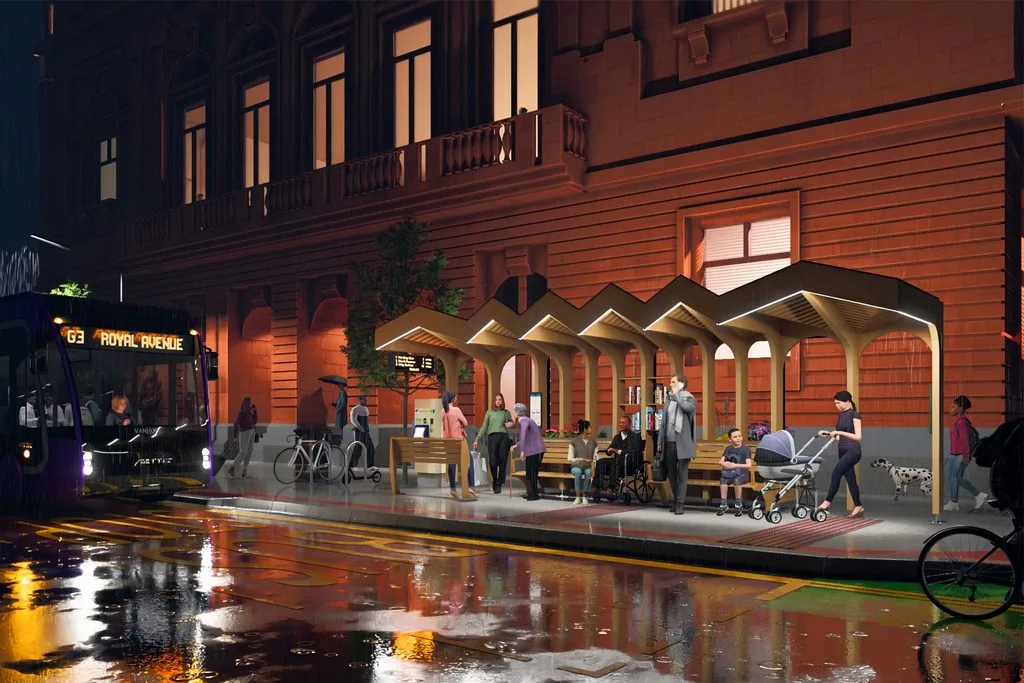
The Common Roof by Cathal McKenna
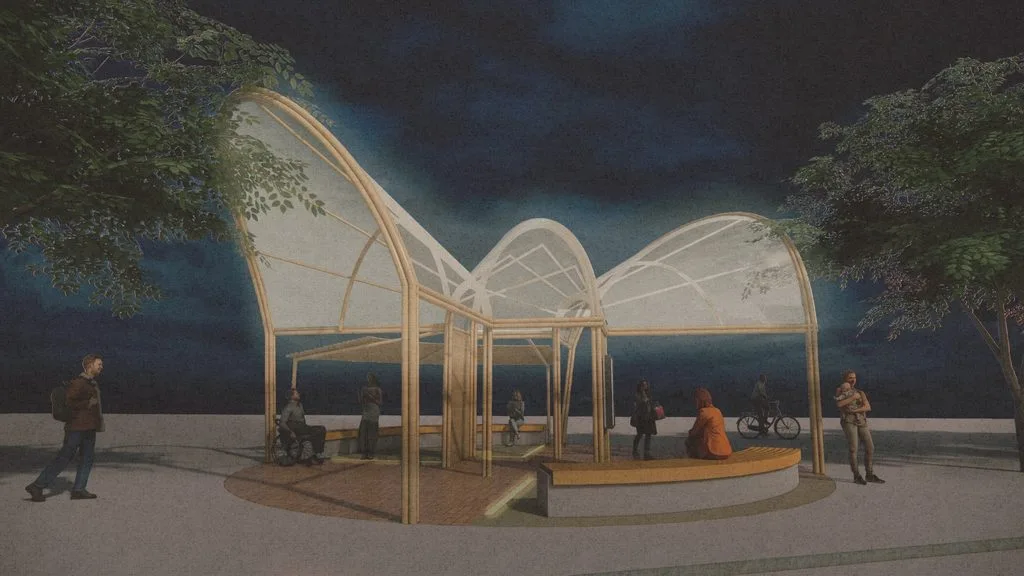
Demonstrating thorough research, The Common Roof by Cathal McKenna comprises a faceted shelter that unfolds like a map above a series of glulam ribs. The result is a robust, practical and scalable bus shelter that maintains a visual connection to the city, helping users to remain aware of their surroundings.
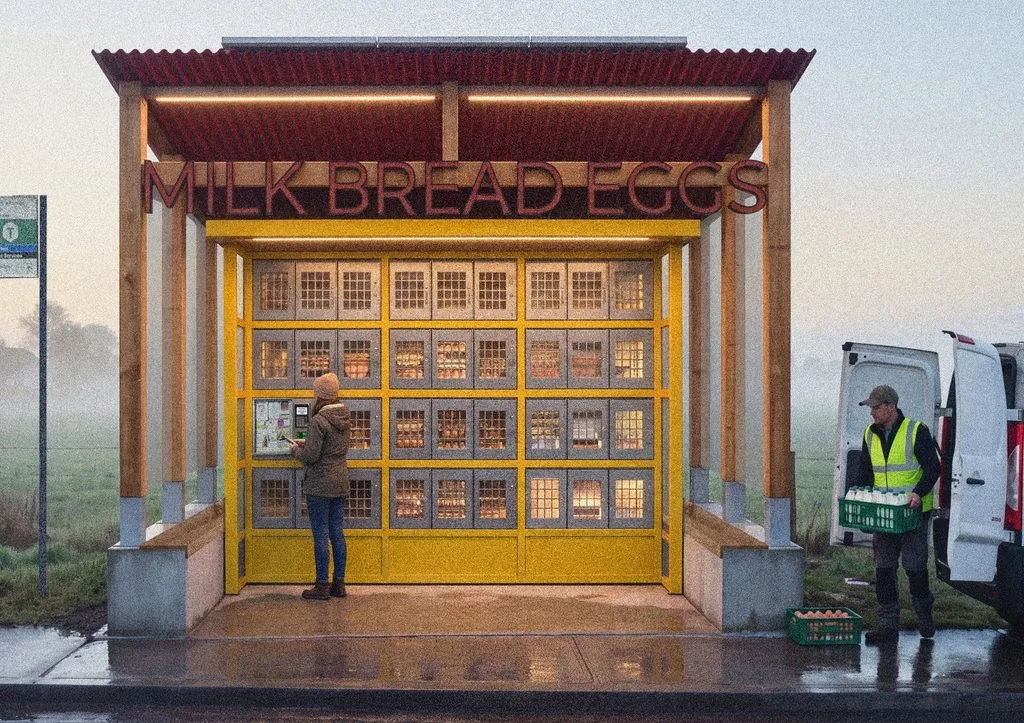
Bus Shop by Emma Campbell and Rebecca Jane McConnell
Identifying a need for passive surveillance, Bus Shop by Emma Campbell and Rebecca Jane McConnell introduces multifunctionality to the rural bus shelter. Using low-cost agricultural materials to extend the existing bus shelter, it becomes a hub for community activity, providing convenient access to everyday essentials alongside a safe place to wait.
See & Be Seen by Ben McCreanor and Kathryn Dowse McCreanor
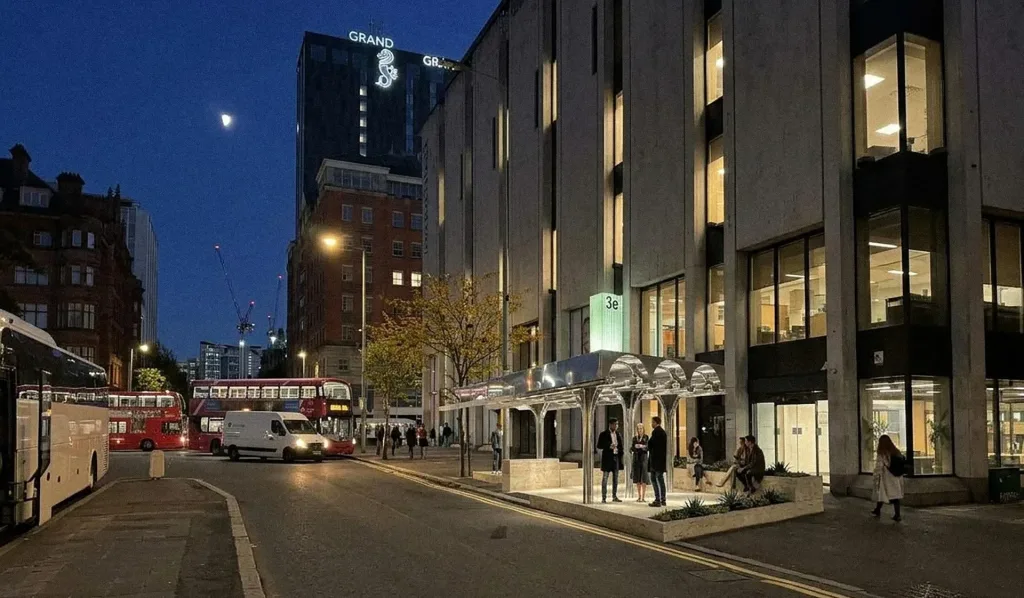
Alongside safety considerations relating to visibility, lighting and openness, See & Be Seen by Ben McCreanor and Kathryn Dowse McCreanor also considers the ability to move away easily. The proposal creates a permeable civic threshold that is beautiful in its simplicity and easily adaptable to other locations.
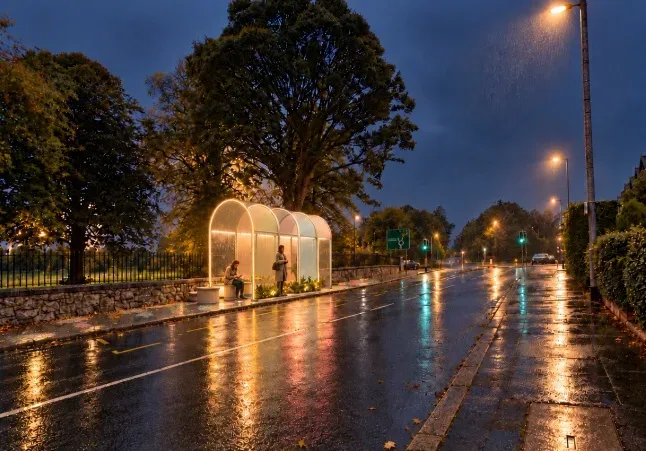
Busshållplats: If IKEA did Bus Shelters by Rory Haughian
Busshållplats is the swedish translation for Bus Shelters and the overarching approach for Rory Haughian’s submission was to encompass the ethos of a popular Swedish furniture brand, providing a ’Flat Pack’ bus shelter solution utilising off-site manufacturing and modular construction methods to provide a shared public space that is inclusive, friendly, welcoming and engaging.
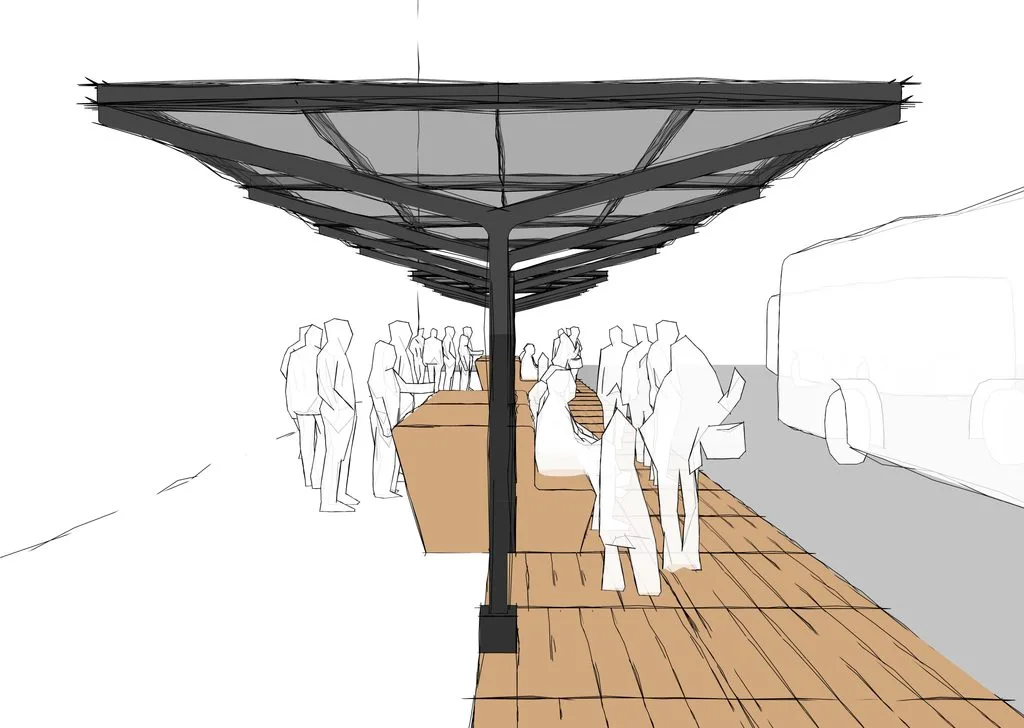
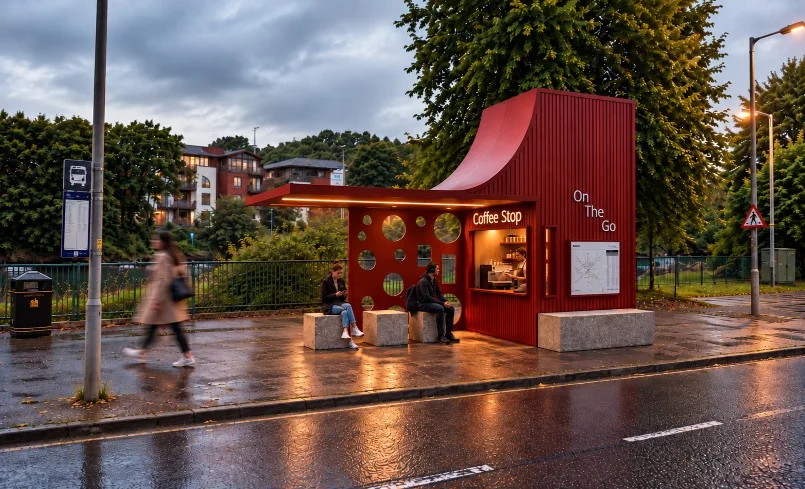
The Act of Waiting by Laura Green
Laura Green’s The Act of Waiting challenges the idea that safety comes from barriers, instead embracing the power of being seen. At its heart lies a simple principle: the presence of others can be our greatest form of protection. Rather than designing another place to wait, the proposal creates a reason to be there. A small, rentable kiosk invites local businesses, coffee shops, artists and newsstands to occupy the space, transforming an ordinary bus stop into a destination.
The Shield of Light by Ananya Jain and Lois Chan
Inspired by the protective symbolism of the Irish Celtic shield knot, The Shield of Light by Ananya Jain and Lois Chan embodies continuity of care, solidarity between women, and the freedom to move through the city without fear. At the heart of the design, bamboo forms a lightweight, expressive structural framework, where its natural flexibility and resilience inform the shelter’s organic geometry.
Hierarchy Pavilion by Caitlin Paxton and Ben Stevenson
Hierarchy Pavilion by Caitlin Paxton and Ben Stevenson looks at how subtle manipulation of form and use of material can create spaces that allow people to feel seen and observe. The proposal creates a pavilion that enables those inhabiting to elevate their physical position or place a subtle barrier.
The New Holywood Arches by William Brady and Jennifer Speirs
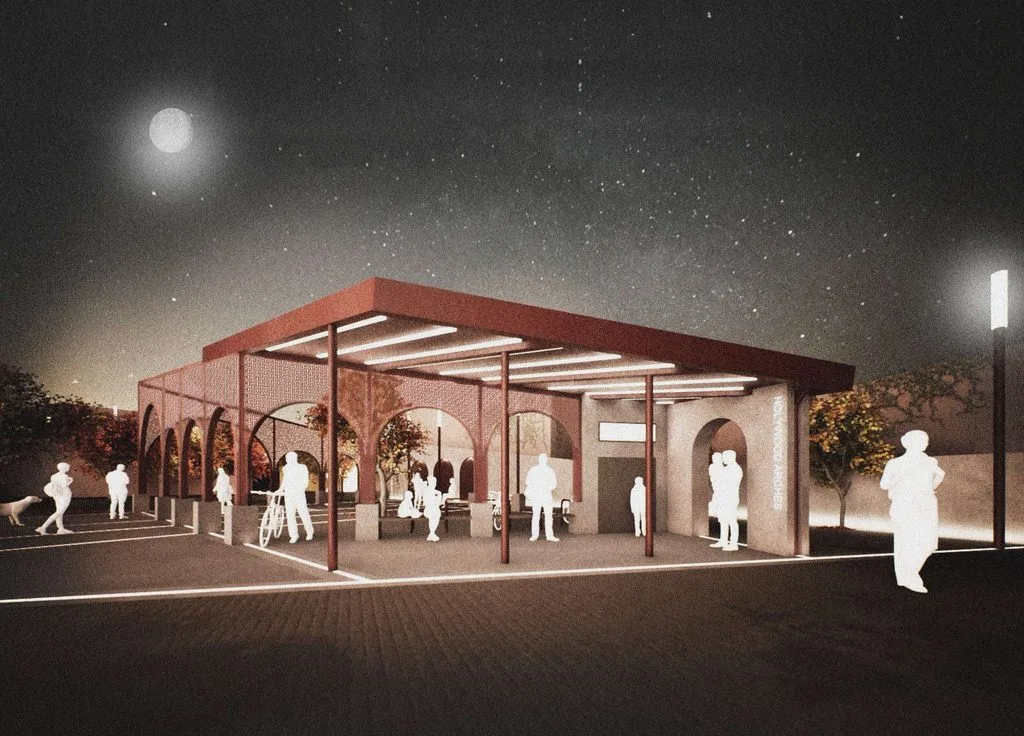
The New Holywood Arches by William Brady and Jennifer Speirs transforms a neglected transport junction into an inclusive civic space connecting public transport, the Comber Greenway and surrounding neighbourhoods. Inspired by the site’s railway heritage, a series of modular arches creates a recognisable identity, providing shelter, seating and a community plaza for markets, exhibitions and gatherings.
Building the Beacon by Ruth McNickle
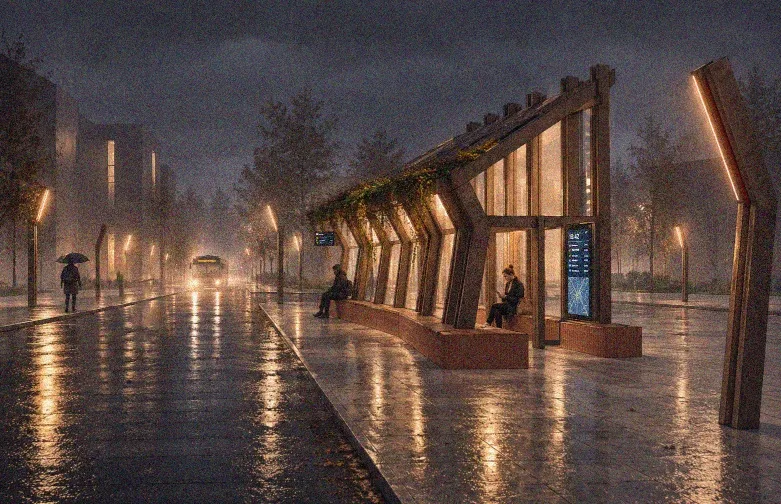
Ruth McNickle’s Building the Beacon is a sustainable, safety-focused bus stop designed to provide vulnerable users with security, comfort and reassurance through integrated lighting, phone charging, live timetable displays and 24/7 emergency video support. Beyond addressing immediate safety concerns, it tackles the root causes of antisocial behaviour and violence against women and girls by offering young people mentored construction apprenticeships to build the bus stops.
LIR: A Shelter in Light by Darragh Walsh
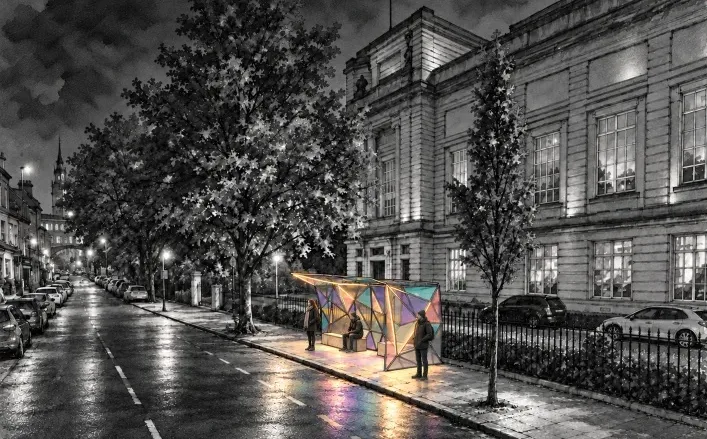
Darragh Walsh’s submission takes inspiration from Belfast-educated Wilhelmina Geddes’ stained-glass work, in particular her The Fate of the Children of Lir in the Ulster Museum. Proposed for the bus stop outside the museum, LIR extends that artistic connection into the street, bringing colour and light to an ordinary moment of waiting. Transparency is central to the proposal. Passengers can look along the road, see who is nearby and remain visible from the street.
The judging panel for the competition consisted of:
