
No products in the basket.
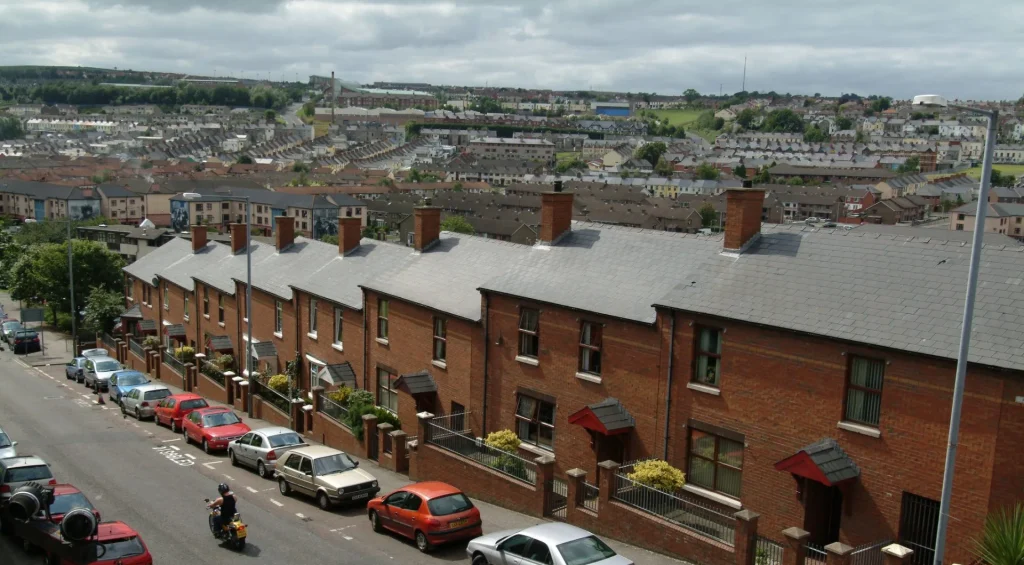
RSUA has today emphasised to the Department for Communities (DfC) the importance of considering the differing character and retrofit potential of social housing before implementing its Revised Decent Homes Standard (DHS).
In a broadly supportive response to a public consultation on the Revised DHS, RSUA also highlighted several areas where DfC’s proposals could be refined to ensure the DHS is more practical, proportionate and aligned with broader climate and sustainability objectives.
RSUA thanks George Brolly, Aisling Madden, Donal MacRandal, Nadine Martin, Frank O’Kane and Denise Quinn for their input.
Background
In November 2025, DfC launched a review of the DHS for existing social housing in Northern Ireland.
The DHS sets the minimum quality standard that all social homes, including those managed by the NI Housing Executive and housing associations, must meet. The current standard was introduced in 2004 and has not been updated since.
A draft revision of the DHS was issued for a consultation that closed for responses on 4 March 2026.
DHS requirements: Variance of existing stock
RSUA commented that while it broadly supports the consultation’s proposal to expand the elements considered in the DHS and distinguish between mandatory and desirable criteria, requirements should better reflect the varying retrofit potential of existing homes.
We cautioned that applying uniform mandatory standards across Northern Ireland’s diverse social housing stock risks requiring upgrades that may be structurally difficult, disruptive to tenants or unrealistic to deliver within available budgets.
Baseline for component maintenance and repair works
RSUA welcomes DfC’s intention to expand the DHS component list to strengthen health and safety standards but queried the proposal to set a baseline for investigating and completing maintenance and repair works, noting that the consultation does not clearly define how this would be measured.
We also emphasised that some existing buildings may face significant constraints in meeting such requirements, meaning the baseline may need to remain aspirational rather than mandatory in certain circumstances.
Enhancing Pillar D
RSUA supports in principle the proposal to strengthen Pillar D of the DHS on thermal comfort, energy efficiency and ventilation, but argued that its measures should be more ambitious and measurable.
We raised concerns that the Revised DHS’ allowance for replacing older boilers with new fossil fuel systems could undermine wider climate commitments, noting that even relatively efficient gas or oil boilers remain carbon intensive.
RSUA therefore recommended that the revised standard include a clear deadline after which the installation of carbon-intensive boilers in social homes would no longer be permitted.
We also suggested requiring housing providers to report annually on the actual energy performance of their stock to demonstrate measurable progress towards net zero targets.
Pillar E: The role of Secured by Design
RSUA is generally satisfied with the proposed inclusion of a fifth Pillar E, focusing on tenant safety, security and wellbeing, but questioned the proposal to require external windows and doors to be certified by Secured by Design (SbD).
We suggested that the absence of SbD-approved components might not, in itself, determine that a home cannot be considered “decent”. RSUA further cautioned that applying SbD requirements in wide-ranging retrofit programmes could lead to unnecessary replacements at significant cost and potentially conflict with circular economy principles that emphasise working within the existing building fabric.
Further engagement
Our full response can be viewed here.
If you have any questions or comments about this response, please contact Curtis Large, RSUA Policy and Public Affairs Officer, at curtis@rsua.org.uk
