No products in the basket.
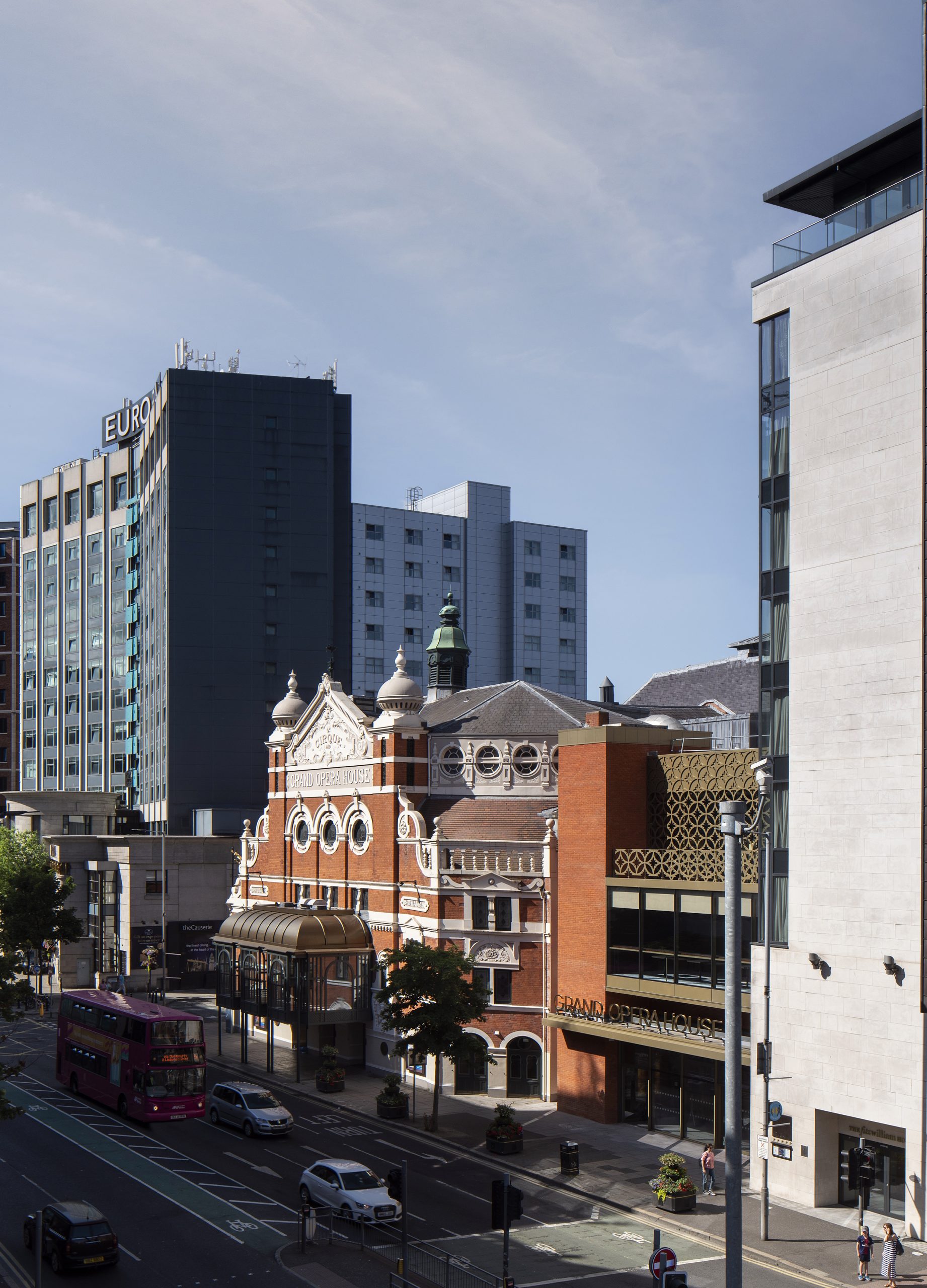
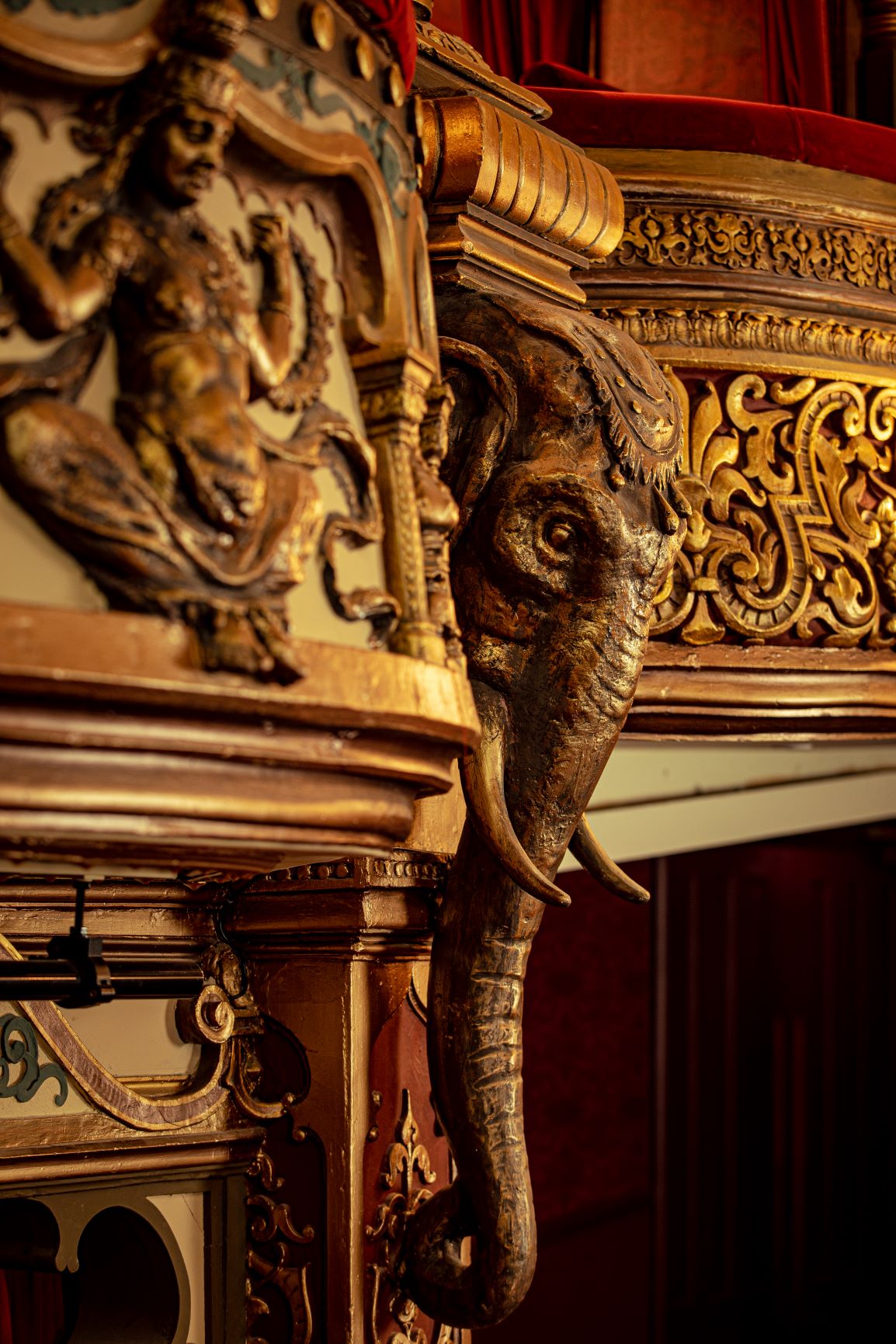
Belfast’s Grand Opera House was built in 1896 to the designs of the prolific UK theatre architect, Frank Matcham. The building has stood for 125 years as a suitably theatrical centrepiece along what was previously Belfast’s ‘Golden Mile’, Great Victoria Street. Like all buildings, the Grand Opera House has been subject to the depredations of time, and in recent years has suffered from increasingly tired building fabric and outdated building infrastructure. While a period of ad hoc patch repair had been the order of the day since its last major refurbishment in the 1970s, in 2017 The Grand Opera House Trust deemed that substantial restoration works were a necessary undertaking in order to ensure the future sustainability of the building, and to ensure its continued enjoyment by those who rightly hold it in such dear regard.
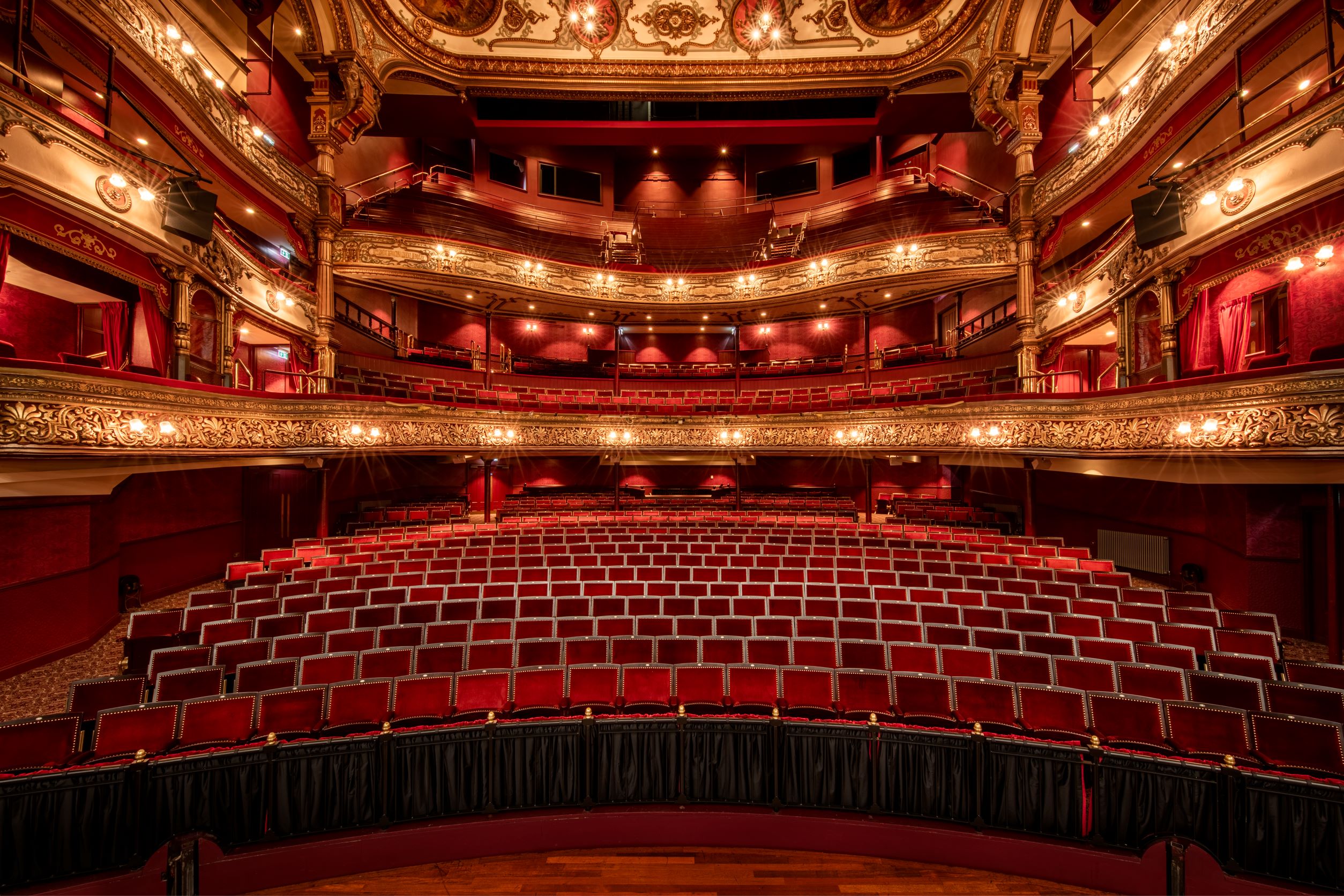
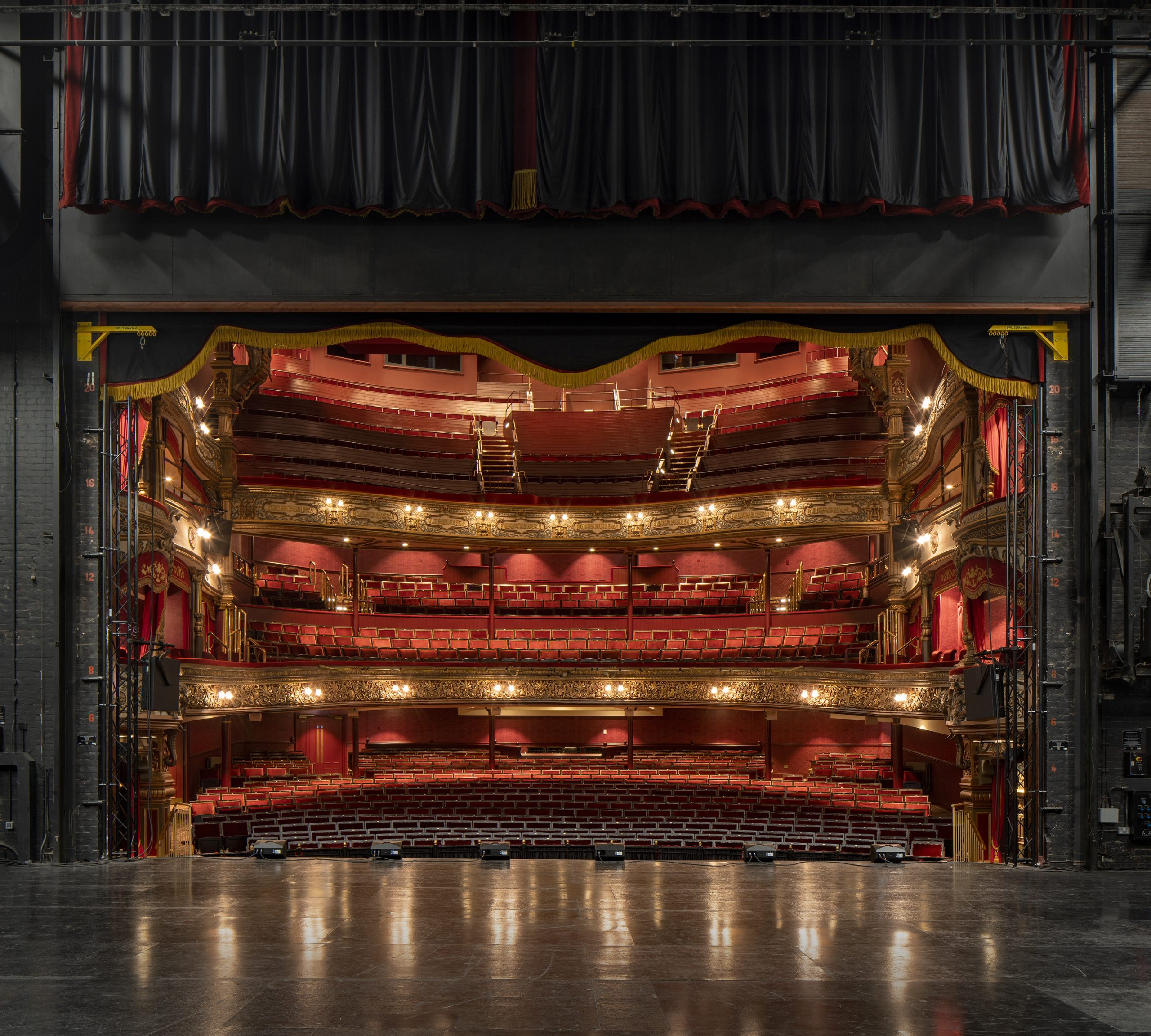
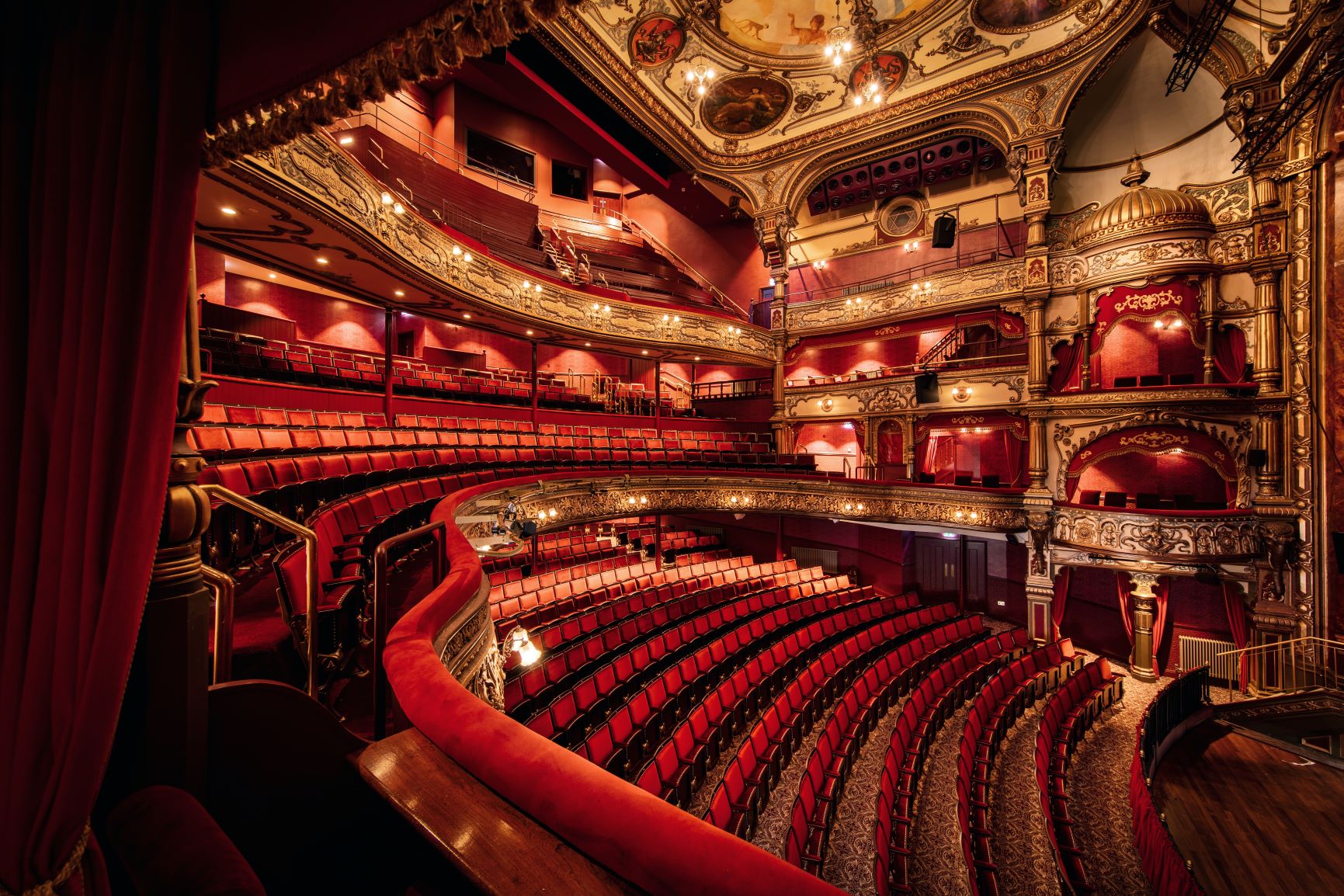
The project posed a challenging brief; to ensure the Grade A listed Grand Opera House building was not only restored to its former splendour, but also future proofed to enable the best theatre experience possible for future audiences, casts and crews. The building’s technical infrastructure and auditorium services were all completely refurbished. In the Grand and Upper Circle levels of the auditorium, the rake of the seats was entirely reconfigured to better resemble the original 1896 arrangement, offering better sightlines and legroom.
The seats themselves were completely refreshed; with 1960s cinema seats replaced with new, better positioned, cast iron studded velvet seats. Minor amendments to the built structure were undertaken to increase corridor widths, provide greater access, and allow greater opportunity for accessible seating.
The auditorium seating arrangement was subtly altered at ground floor to maximise intuitive visitor flow to and from seats, with historic doorways opened up to provide a more direct connection with the main foyer space. While significant works were undertaken to introduce ventilation and specialist stage lighting equipment into the auditorium, the fact that this is largely unperceived is testament to the thorough co-ordination required to conceal the significant new infrastructure – an exercise in ‘smoke and mirrors’ perhaps. Within all of the works to realise the client’s
brief, the key overriding consideration was retention of the heritage character of the building – maximising the special qualities that make the Grand Opera House so endearing to those who visit.
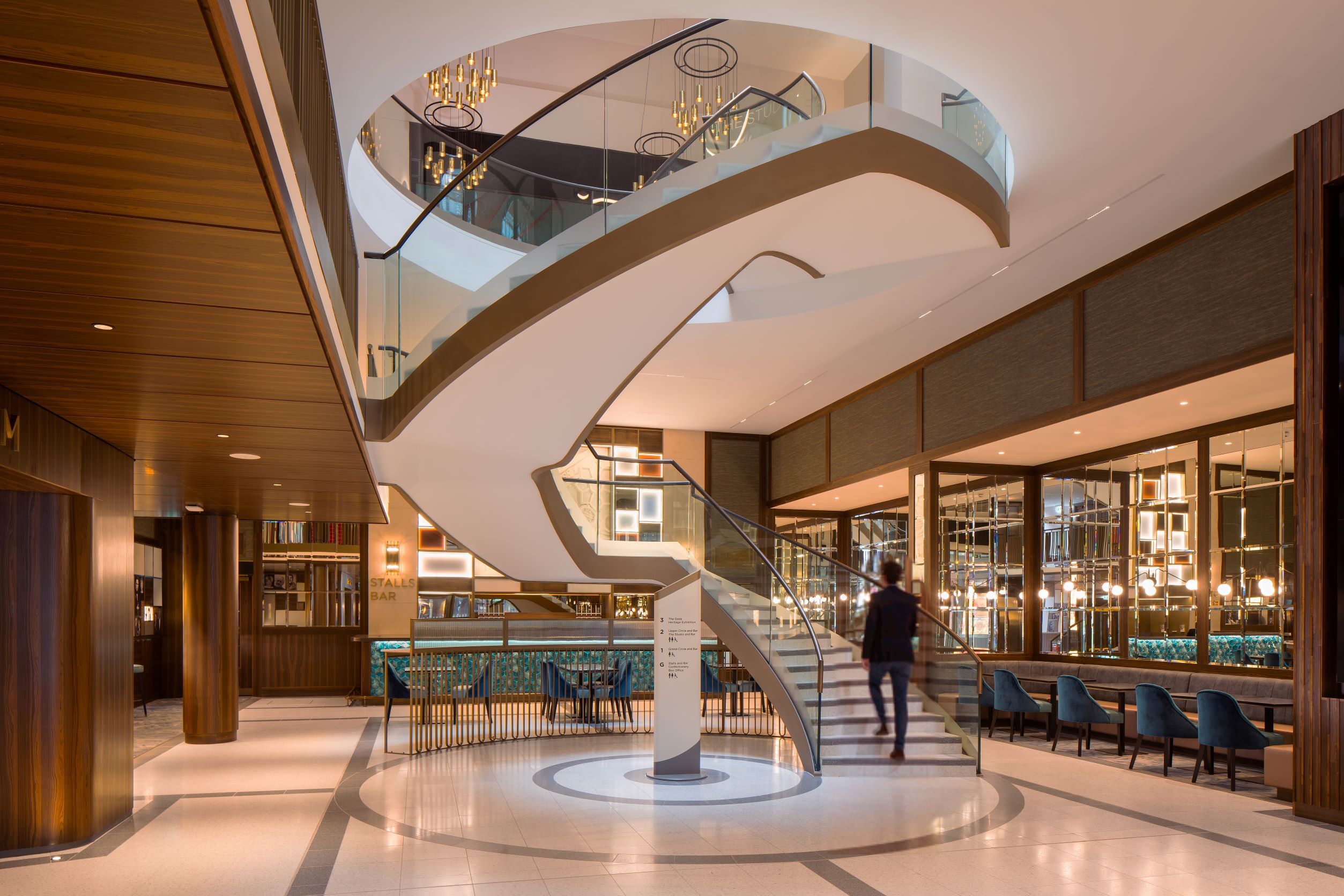
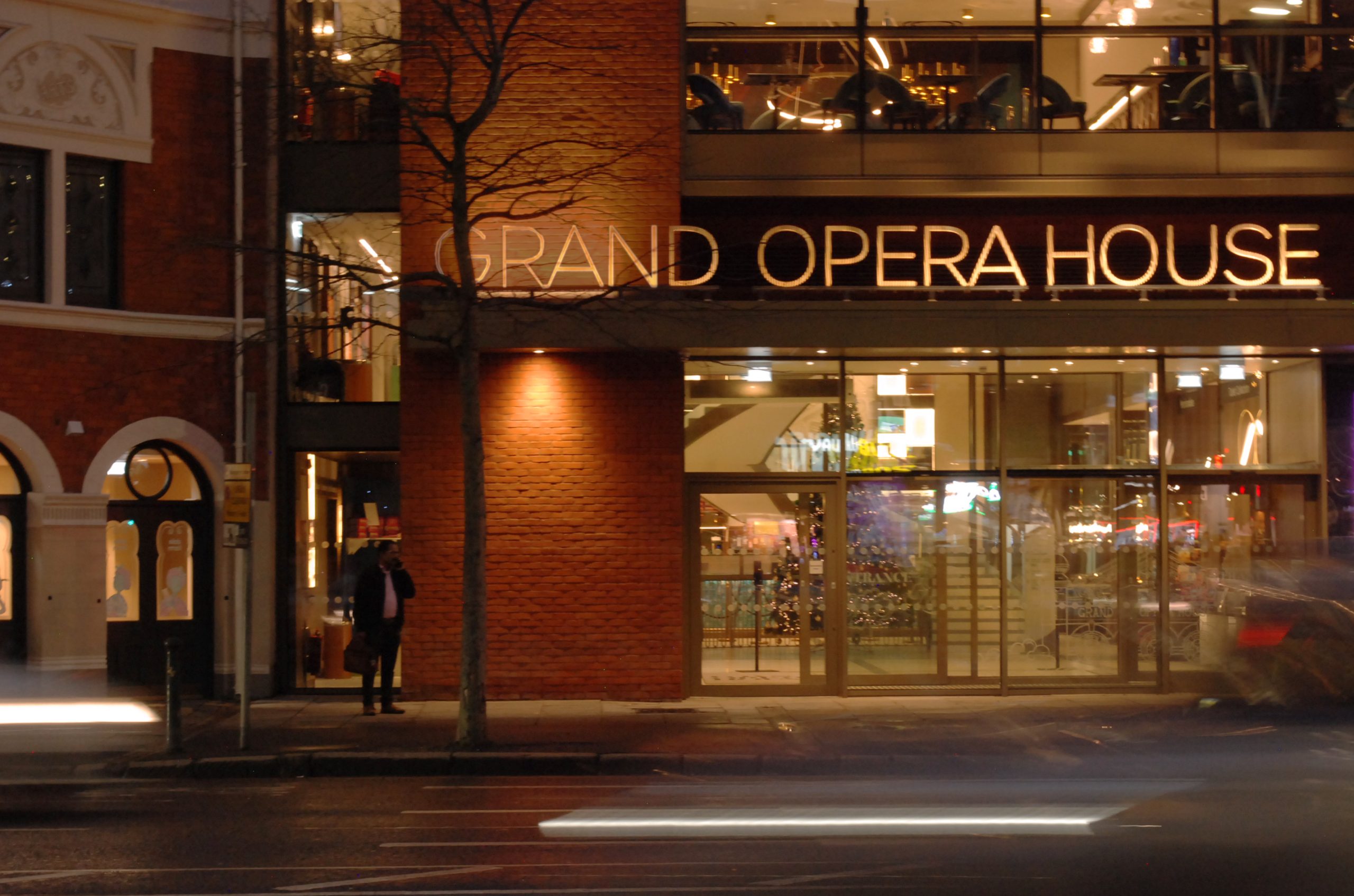
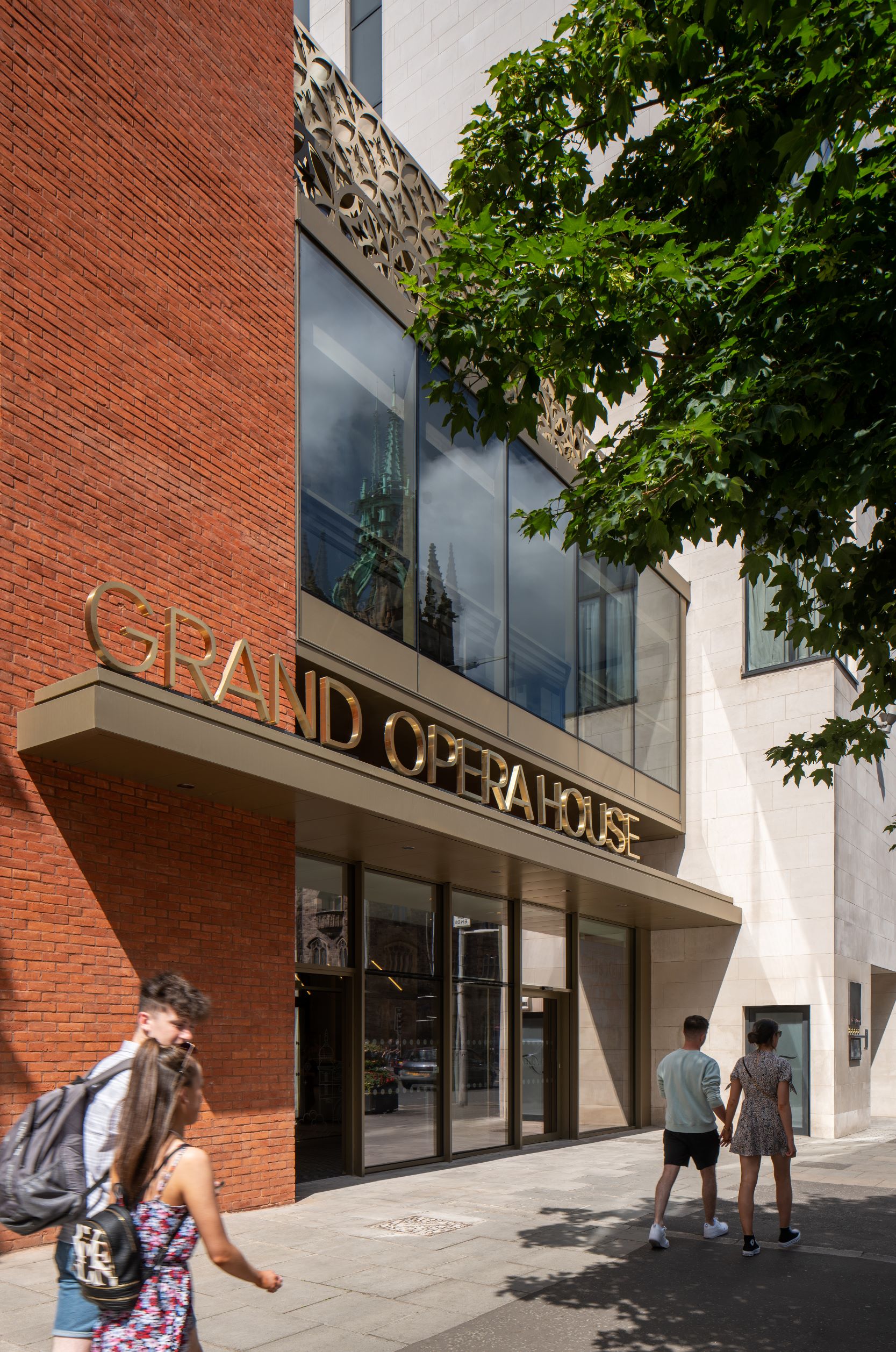
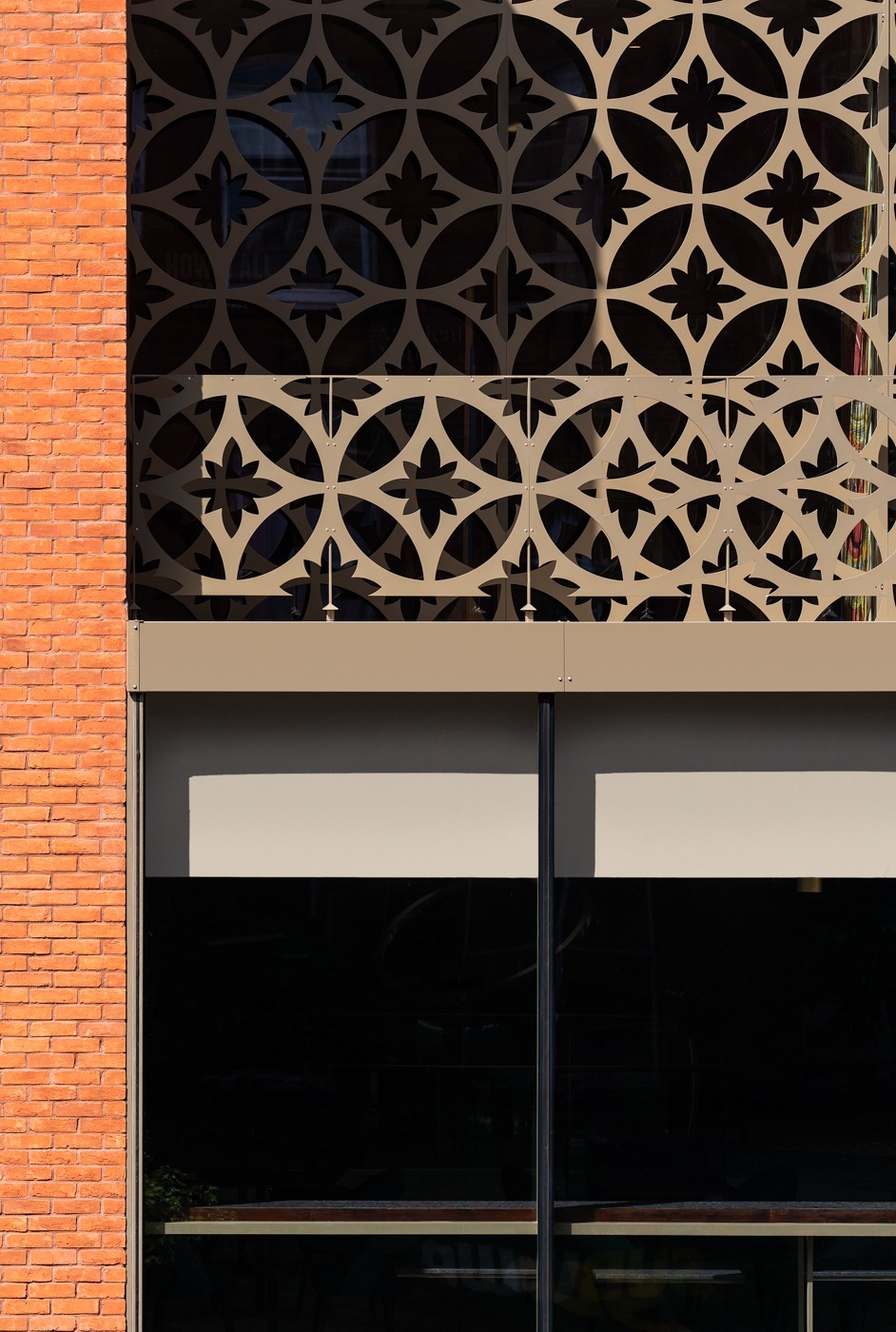
The work to conserve the building’s unique architectural features and paintings was undertaken by specially skilled conservationists and tradespeople. Refurbishment works were not restricted to the historic auditorium. Key aspirations of enhancing the visitor experience meant that the 2006 extension which contains the main box office and bar areas was reordered both internally and externally to sit more cohesively as a constituent part of the main theatre building. Structural amendments were undertaken to
maximise enjoyable floor space and rationalise the external facade. Interior fixtures and furnishings, and a suitably theatrical helical stair centrepiece ensure that the visitor experience of an opulent evening at the theatre is experienced consistently throughout the whole building.